
A cat peeing around the home may be avoiding its litter box, preferring another surface or location, marking, or experiencing a health problem. The most useful starting point is to identify the pattern and restore easy access to a clean, comfortable toilet. A sudden change deserves assessment before you treat it as a training problem.
The household examples below come from publicly shared experiences, not a statistical study; individual cats, homes, and simultaneous changes affect the outcome.
Separate a puddle, a spray, and a missed box
Cornell’s house-soiling explanation distinguishes medical causes, aversion to the litter box, and preferences for another place. It also recommends distinguishing urine spraying from other elimination outside the box. Start with the behavior you can see rather than assigning a motive to the mess.
The ASPCA describes marking as commonly involving a standing cat, an upright tail, and a smaller deposit on a vertical surface. A squat and a puddle on the floor is a different observation. Neither description rules out a need to assess health or the environment.
Also check whether the cat entered the box but urine went over its edge. That differs from walking into another room to eliminate. Record the posture, surface, approximate location, and whether urine was produced. If there are several cats, identify the individual when possible rather than attributing every puddle to the cat you happened to see nearby.
A room-by-room note is useful: bed, couch, clothes, bathtub, floor beside the tray, or a vertical object. The distribution can guide the next setup check without becoming a diagnosis.
Look for the bathroom condition the cat is avoiding
The ASPCA lists box cleanliness, dimensions, covers, access, location, and litter preferences among common management problems. A cat may avoid a particular tray while continuing to use another. That makes a comparison between available toilets more informative than repeatedly putting the cat back into the rejected one.
Walk each route at the times accidents happen. Check doors, stairs, high edges, narrow passageways, appliances, and other animals. A tray can be physically present but effectively unavailable when a dog sleeps in front of it or another cat watches its only exit.
Compare the container with the cat’s normal toileting posture. Look for space to turn, settle, and leave without balancing on an uncomfortable edge. If the box has a lid or flap, offer an accessible open alternative with familiar litter before deciding the cat has forgotten how to use a toilet.
| Pattern | First setup check | Useful observation |
|---|---|---|
| Urine beside the tray | Entry, interior room, posture, spill over the edge | Did the cat enter or avoid it? |
| Several soft surfaces | Litter feel, location choice, available trays | Which surfaces and rooms recur? |
| Accidents after a move or adoption | Findable toilets and a predictable routine | Can the cat reach a box from its resting area? |
| One cat struggling in a multi-cat home | Separate access and escape routes | Is another animal waiting nearby? |
| Trouble after changing equipment | Lid, flap, substrate, automatic cycle | Which feature changed before refusal? |
Rebuild a comfortable litter-box arrangement
ASPCA guidance recommends one box per cat plus one extra, a shallow 1–2-inch bed of litter in a conventional tray, daily waste removal, and a weekly wash with unscented soap or baking soda. These are practical starting conditions; equipment with a fill line needs its own specified level.
Keep the accepted box available while offering an alternative. Use the familiar litter first so that you are comparing the container or location, rather than several new features together. Distribute toilets so that they offer independent approaches; a row behind the same guarded doorway does not solve that access problem.
More room was part of a wider change. In a two-cat home, the owner provided three boxes, removed covers, and used large open trays; after broader home changes, the owner reported six months without another accident outside. Begin by checking whether each cat has a roomy, independently accessible toilet.
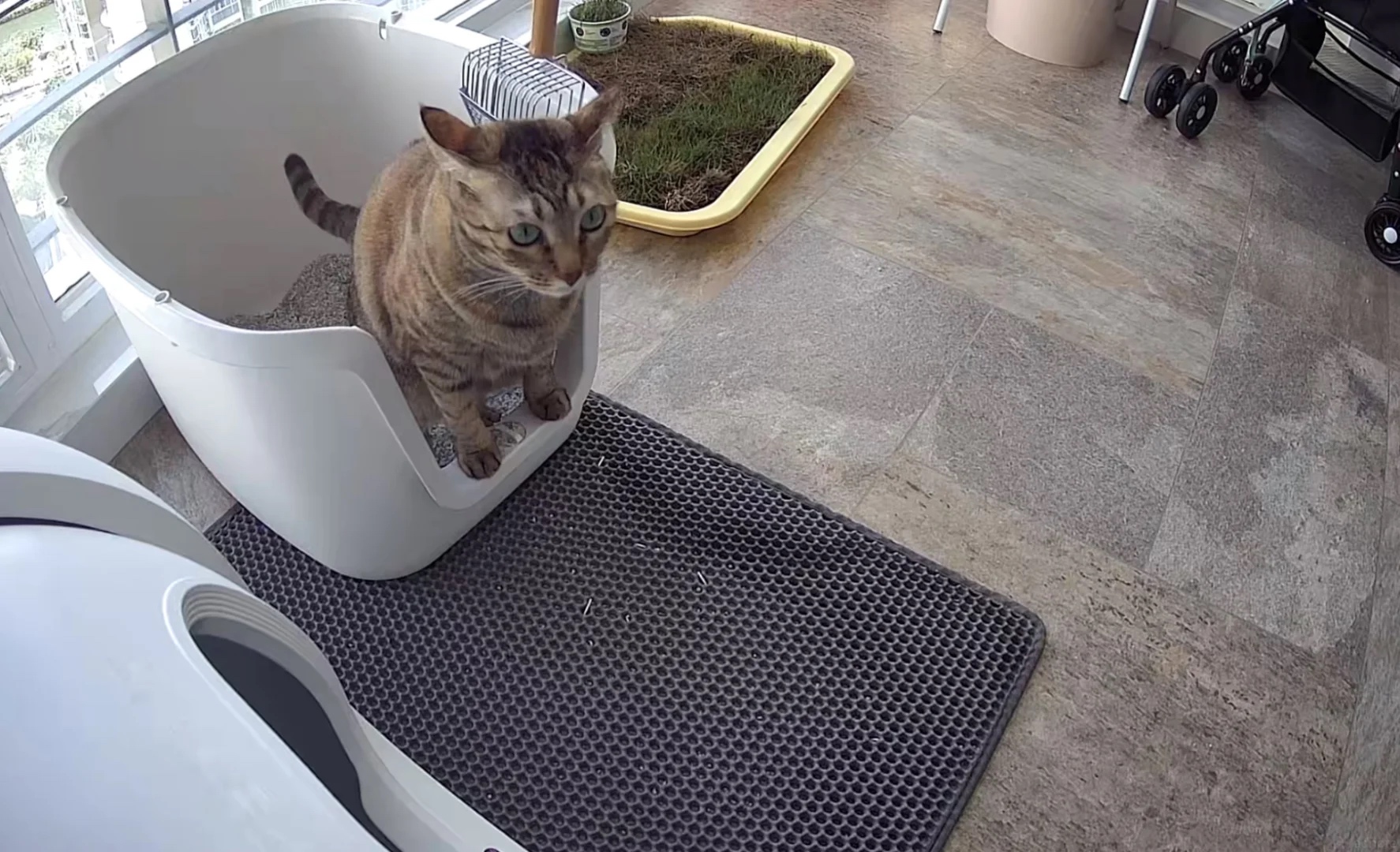
Choose one adjustment you can describe clearly, then record its result. For example, add an open tray in an accessible location while leaving the old setup usable. Keep the rest of the routine steady enough to see whether that option changes where the cat goes.
Help a kitten find and enter the toilet
After about half a month of accidents, one two-month-old kitten’s household added a second tray, changed litter, and offered rewards. Make the entrance easy to reach and track actual use while keeping other changes limited.
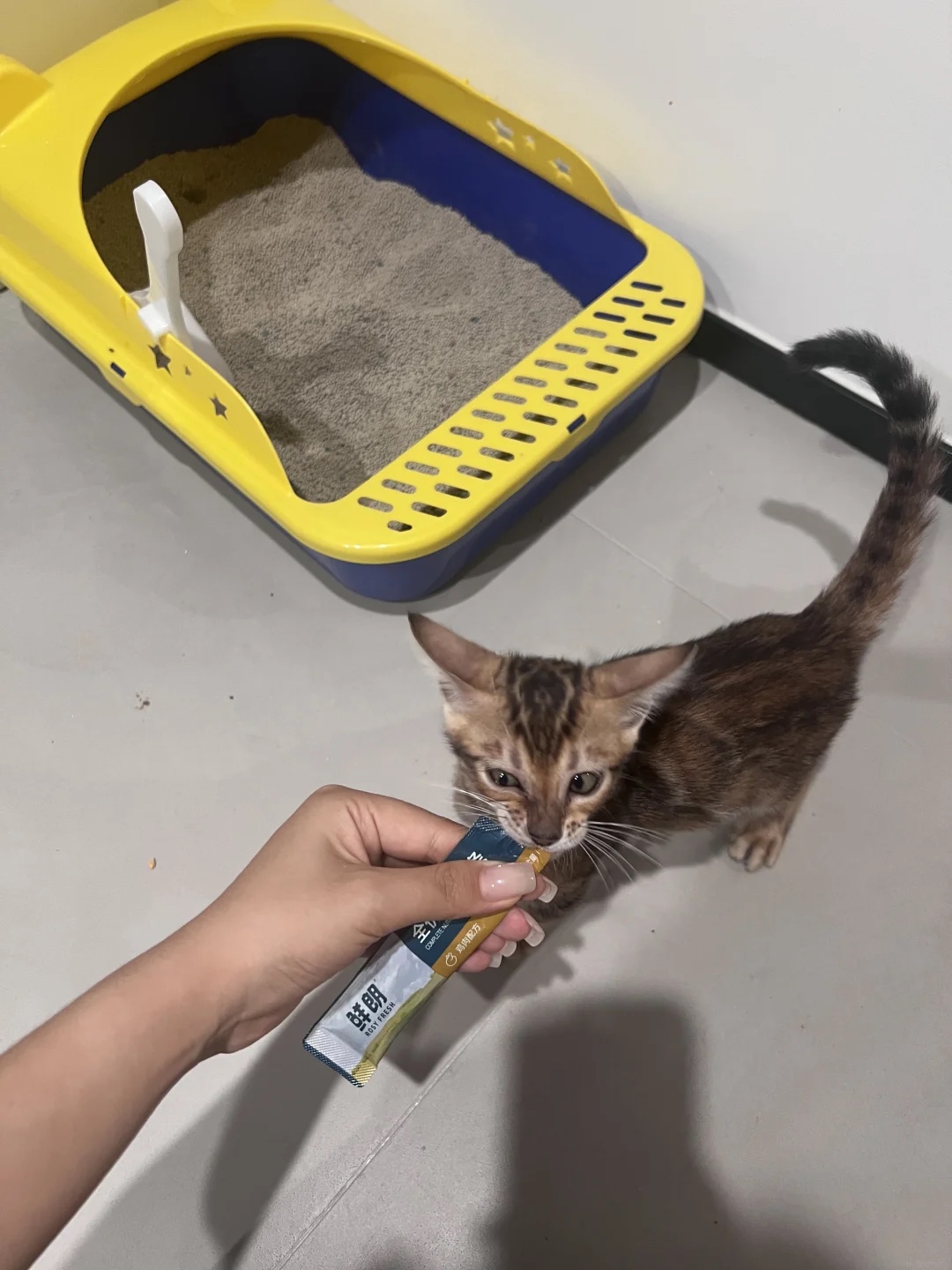
Another owner’s four-month trial contrasted a top-entry setup used at about 40 days old with a low tray the kitten entered voluntarily; check the step height before adding training.
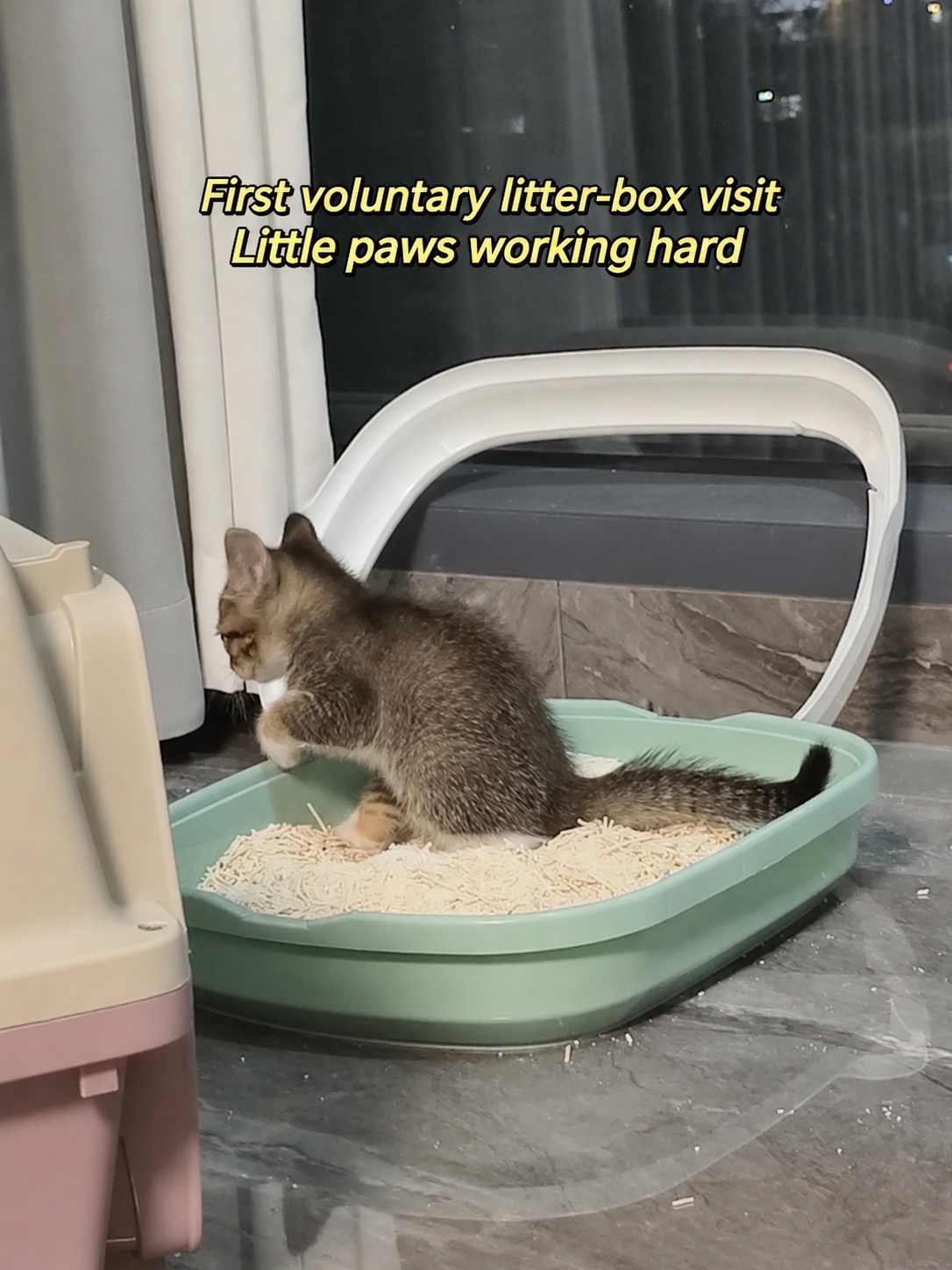
Older cats and litter-box access
Cornell’s guidance for older cats explains that arthritis can make access harder and recommends very low sides and a box on each floor. Put an easy-entry tray near the cat’s usual resting area so that reaching a toilet does not require stairs or a jump.
Cornell also recommends nightlights for older cats with poor vision. Check the route after dark: keep the toilet in a consistent place, leave doors open, and remove obstacles between the resting area and the tray. New accidents still call for assessment rather than being dismissed as aging.
Clean accidents while keeping the next visit easy
Use an enzyme cleaner appropriate for the soiled surface, and keep the cat away until the treated area is ready for use. The ASPCA includes urine-odor removal in its management approach. Surface compatibility still matters: a product suitable for one floor or fabric may exclude another.
Blot a fresh accident and deal with the affected item rather than spreading the wet area through the room. Put washable clothes into a closed hamper and keep the accepted toilet available during cleanup. A stronger fragrance does not tell you whether the cat’s bathroom problem has changed.
Keep responses calm. Chasing, scolding, or repeatedly carrying the cat to the box adds a confrontation to the toilet routine. Reward comfortable use without waiting beside the entrance or interrupting the cat.
Record progress and know when to seek assessment
Use a short log with the date, cat, location, posture, actual urine, available boxes, and the single feature changed. A clean afternoon is encouraging; check repeated visits before removing a fallback tray. If an automatic unit stops cycling, resolve the device fault separately while keeping a conventional toilet available.
Arrange veterinary assessment for a new or recurring change. If a cat strains and produces little or no urine, seek urgent help rather than extending a home setup trial: the Veterinary Referral Center of Central Oregon’s urination guidance identifies inability to urinate as an emergency. Bring the observation log so that the actual pattern is clear.
Cornell’s urinary-tract guidance notes that male cats, including neutered males, have a longer, narrower urethra and a higher obstruction risk than females. A male cat making repeated attempts with little or no urine needs immediate veterinary care; changing the litter box is not a substitute.
Both male and female cats can urine-mark, including cats that have been spayed or neutered, according to the ASPCA. Sex alone does not explain a puddle or establish a medical cause: note posture, actual output, and access to the box, then discuss a new pattern with the veterinarian. If accidents begin after a cat has kittens, include that timing when seeking assessment and make her familiar toilet easy to reach.
FAQ
Why is a cat suddenly peeing everywhere?
A new health problem, box aversion, marking, or a change in available resources can alter toileting. Note what changed and arrange assessment rather than assuming a new behavior is deliberate.
How can you get a cat to use the litter box again?
Restore the familiar accepted option, provide an easy-entry alternative with familiar litter, and review cleaning and access. Test one feature at a time while recording actual bathroom visits.
Can a dirty litter box make a cat pee elsewhere?
Yes, insufficient cleaning is one of the management problems the ASPCA identifies. Scoop daily, keep access clear, and check the number and placement of boxes as well as their cleanliness.