Use non-clumping pine pellets sold for pet litter, remove solid waste daily, and separate the damp sawdust from intact pellets with a compatible sifting tray. Start a change gradually while keeping a familiar litter box available, and check whether the cat actually uses the pellets for both urine and stool. The household cases below compile publicly shared experiences rather than a controlled comparison.
Step 1: Check the wood and the litter type
Read the bag before setting up the box. Non-clumping pine pellets break down into sawdust when wet; clumping wood litter needs a different cleaning routine. A package labeled hardwood describes a different wood category, even when its pellets look similar. Choose material explicitly intended for pet litter rather than assuming heating fuel or barbecue pellets are interchangeable.
The Feline Pine non-clumping FAQ describes compressed pine fibers absorbing urine and breaking apart. Its ordinary-box method lets intact pellets rise above the sawdust when the box is gently shaken. A sifting setup adds a separate lower tray to collect those smaller particles; that lower tray becomes another part to empty and wash.
Gather a solid-waste scoop, a compatible sifting tray and catch pan, fresh pellets, a trash bag, and a soft washing brush. Put the waste bag within reach before lifting a full tray. The practical aim is simple: scoop without scattering stool, separate the sawdust, and return a stable box to the same usable position.
Are pine pellets safe, good for cats, or better than clay?
Pine pellets sold as cat litter can be a workable option when the cat accepts them; they are not automatically better than ordinary clumping clay. Feline Pine describes its own non-clumping product as compressed pine made from kiln-dried reclaimed shavings, without added fragrance. That description applies to its pet litter, rather than establishing that every wood, fuel, or barbecue pellet is suitable for a litter box.
FelineVMA’s advice on litter texture and scent says most cats prefer soft, unscented clumping litter. It also notes that pine scent can bother cats with asthma and that very hard litter can be uncomfortable for sensitive paws. Choose a pet-litter product with a stated composition, and keep a familiar option available if the new texture or smell puts the cat off.
Compared with clumping clay, non-clumping pine absorbs urine by breaking into sawdust instead of forming scoopable urine clumps. A sifter can separate that sawdust, but the lower pan still needs cleaning. The useful test is whether the cat comfortably uses it for both urine and stool and whether you can maintain it; an easier cleanup in one household does not establish a health advantage.
Step 2: Check the tray before filling it
A two-level setup needs an upper surface that holds intact pellets and a lower pan that catches the sawdust. Test a small amount of the actual litter in the empty tray. Look for whole pellets falling through, openings that retain all the sawdust, and edges that leave a gap outside the catch pan.
Set the assembled box on a level floor and press gently at its corners. The upper tray should remain supported instead of rocking, bowing, or slipping into the lower pan. Check the space underneath so collected sawdust can fall clear of the grid. Empty the lower pan before material piles up against the underside.
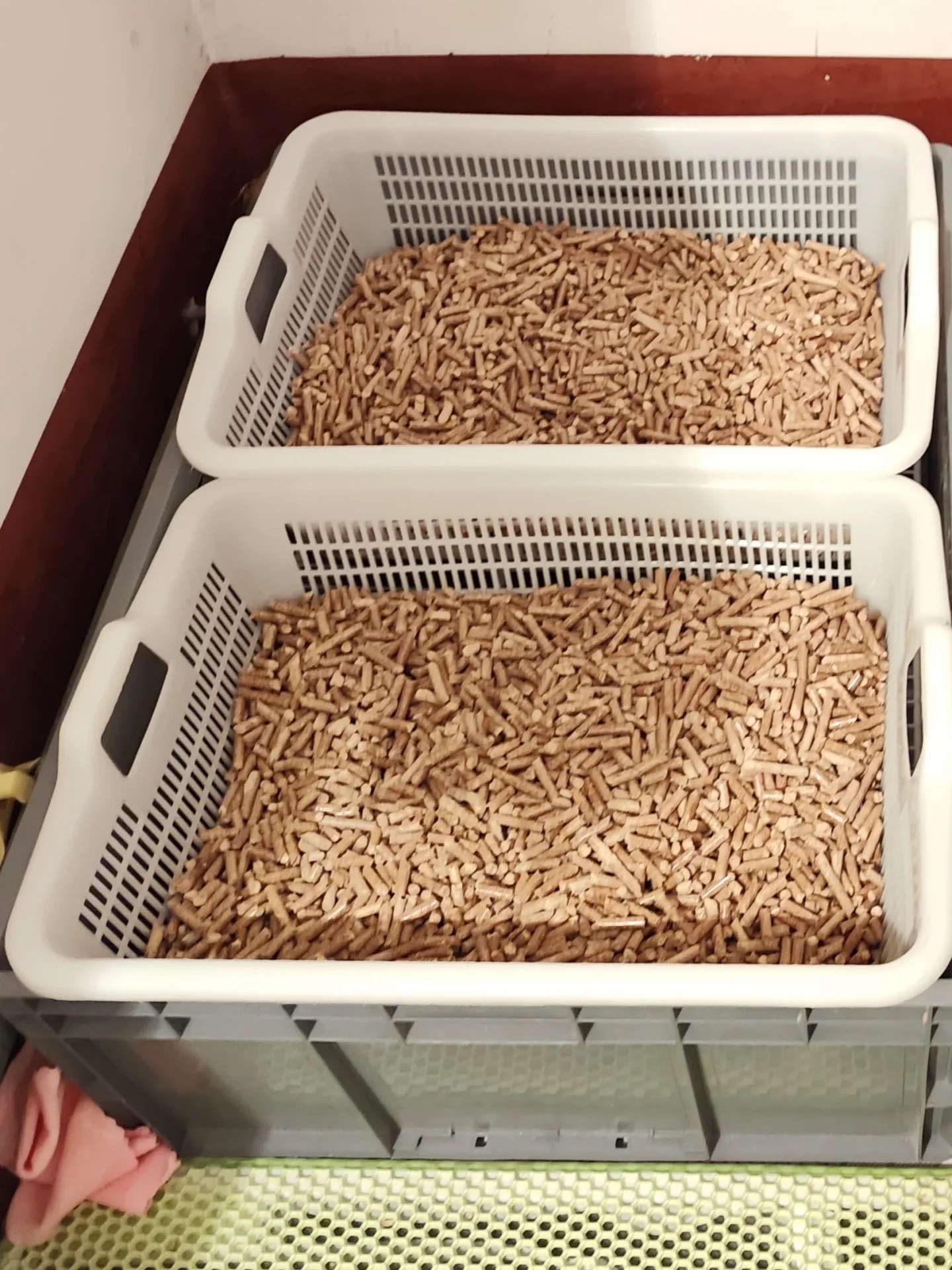
A larger tray needed its own support. One owner paired a roughly 31.5-by-23.6-inch catch tub with two 22-by-16.5-inch grid baskets, using two computer stands because the baskets could not rest directly on the tub’s rim. The photograph shows both baskets filled with wood pellets; check the support under every corner before filling a similar two-level setup.
Choose dimensions around the cat, too. FelineVMA’s litter-box setup guidance recommends a box about 1.5 times the cat’s nose-to-tail-base length. A 16-inch cat would therefore need about 24 inches of box length. Measure the usable inside space, especially where sloping walls or a cover reduce it.
Step 3: Introduce the texture gradually
Keep the familiar box in service during the change. The cat needs a usable toilet while deciding whether the new texture and wood smell are acceptable. Place the pellet option where it can be reached easily, with room to turn and an entry the cat can step through comfortably.
For its own product, the Feline Pine transition instructions start with 1 inch of pellets under 1–2 inches of familiar litter. They reduce the old litter over another 3–4 litter changes. Use that layering trial in a regular box: mixing fine litter into a working sifter can make it fall into the catch pan along with the sawdust.
Advance when the cat is using the option comfortably, rather than removing its old box on a deadline. Track urine and stool separately. A box that receives an occasional urine visit may still be one the cat avoids for bowel movements; the distinction is more useful than a general note saying the change worked.
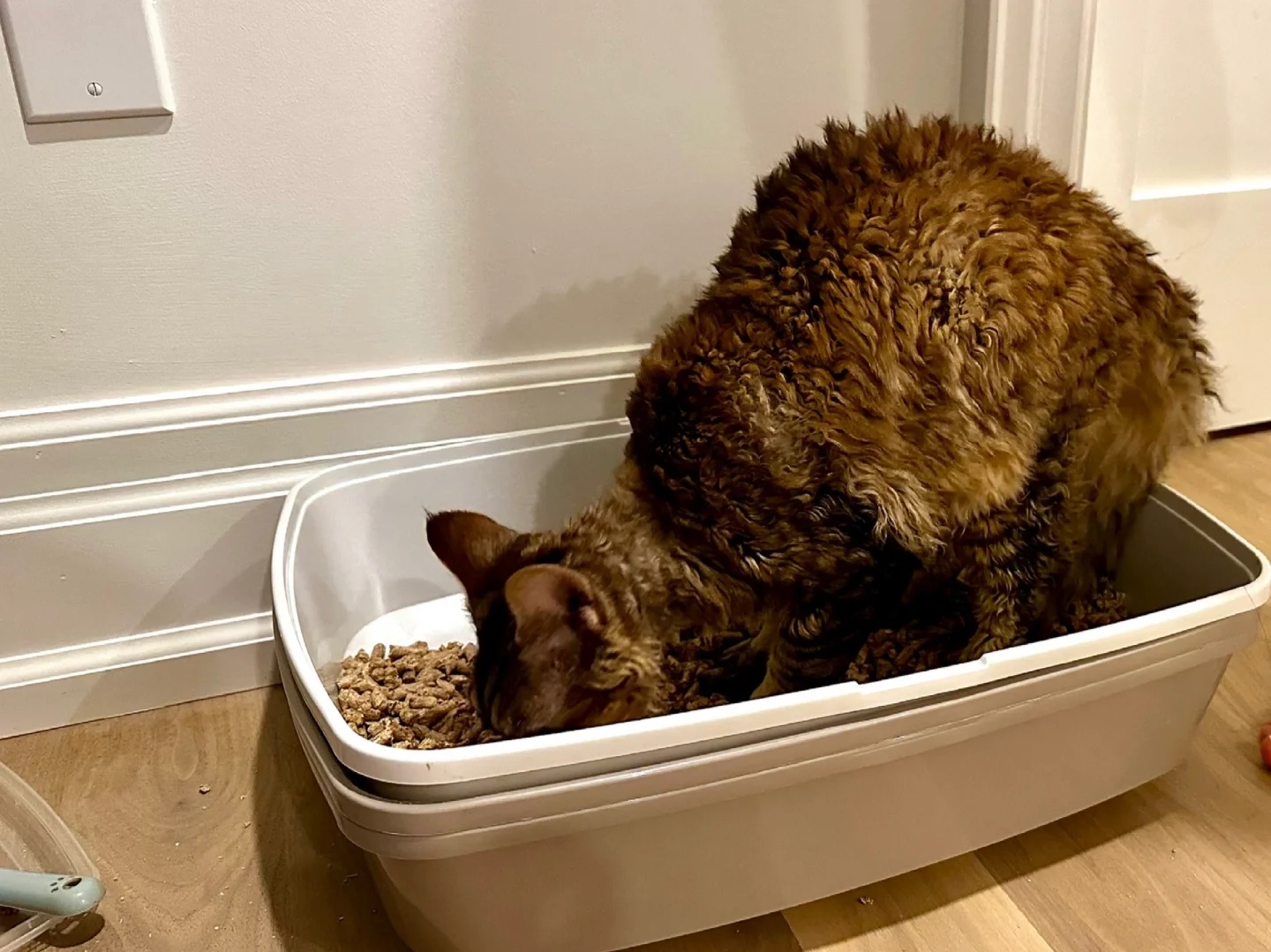
Five months did not settle the preference. After five months with pine litter, another owner still reported occasional urine use and little stool use, with the cat preferring mineral litter. A low-rimmed tray had also let urine escape before the owner changed the setup; record both kinds of toilet visit and check the rim for leaks before retiring the familiar box.
For the broader changeover question, see helping a cat use a new litter box. Keep the litter trial separate from a material change to the box whenever possible, so the cat has fewer new things to negotiate at once.
Step 4: Scoop solids and sift gently
Remove stool at least daily, including pellets stuck to it. Gently move the remaining litter across the grid so broken-down particles fall into the catch pan. Lift slowly and keep the catch pan directly underneath; broad shaking above the floor creates a cleanup job without improving the separation.
Check the pan each day and empty accumulated sawdust into a bag for household trash. Add fresh pellets to restore the working depth for the litter you are using. Keeping the catching space clear is especially useful in a shallow two-level system, where a pile of sawdust can quickly reach the grid.
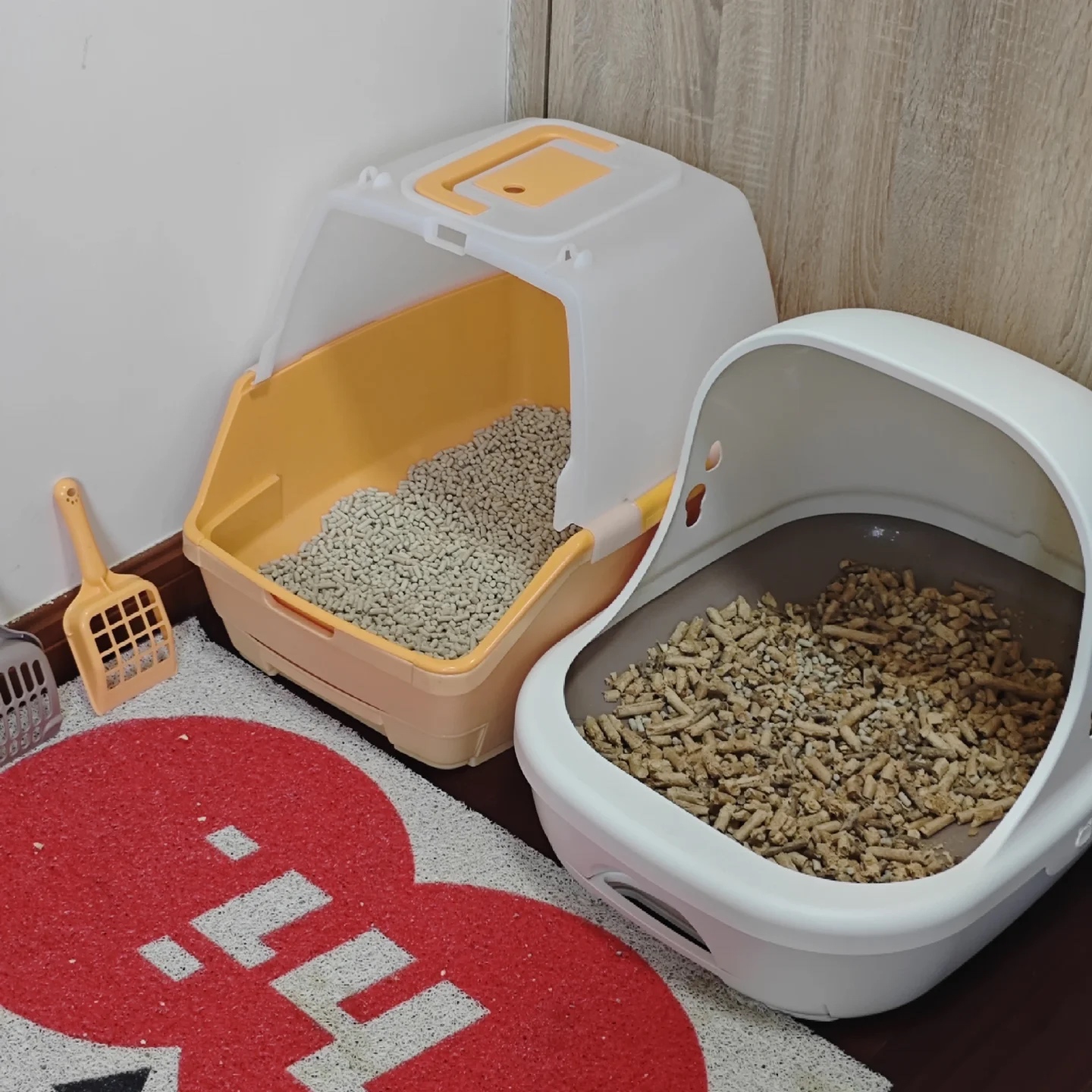
Daily sawdust removal changed the cleanup. In a three-month hardwood-pellet account, a two-cat household emptied sawdust daily after noticing that accumulated particles could be tracked onto the floor. The owner reported only a few intact pellets escaping during the daily routine; check the lower tray at the same time as the morning scoop and empty the loose material before it reaches the grid.
Step 5: Wash the whole setup and reassess
Bag the used litter, then wash the upper tray, catch pan, and accessible supports. The CDC’s pet-supply cleaning guidance distinguishes washing away dirt from disinfecting; begin with physical cleaning and use a pet-suitable cleaner compatible with the material. Rinse thoroughly and dry the pieces before refilling.
Keep a short checklist of what changed: litter type, depth, tray, cleaning frequency, urine use, stool use, and spilled particles. If the cat keeps choosing the familiar litter, retain that option and reassess the texture or setup. If the pan is cracked or cannot be cleaned, checking whether the litter box needs replacement is the next decision.
FAQ
How do you use pine pellets for cat litter?
Use pet-litter pellets, scoop stool daily, and separate wet sawdust from intact pellets. With a sifter, keep the grid stable and clear the lower pan; with an ordinary box, use the product’s own stirring and replacement routine.
Do cats like pellet litter?
Preferences differ. Offer the pellet box alongside a familiar option and record urine and stool visits separately. The five-month case above shows why an occasional visit is a reason to keep observing.
Can you use wood pellets for cat litter?
Select pellets labeled for pet litter and identify the wood and whether they clump. The hardwood account above illustrates sawdust cleanup, while the pine-product directions describe a specific pine litter’s transition method.