Give each cat a secure space and separate resources, introduce scent before sight, then progress through a barrier to short supervised meetings. Move forward when both cats stay comfortable, and return to an easier stage when staring, hissing, blocking, or chasing appears. The household timelines below compile publicly shared experiences rather than a test of how quickly introductions should work.
Can male–female, two female, or two male cats get along?
All three pairings can work, but the sexes on the adoption forms cannot predict friendship. Cats Protection’s guidance on choosing a cat emphasizes individual upbringing and experience, with little personality difference between males and females, especially after neutering. VCA’s second-cat advice notes limited research on unrelated housemates and recommends considering compatible personalities.
For a male–female pair, compare activity levels and each cat’s history around other cats. For two females, watch access to resting places and litter boxes rather than treating their sex as the explanation for conflict. For two males, use the same gradual introduction and separate resources. These sources do not establish a reliably best sex combination; let both cats’ behavior determine the next step.
Step 1: Prepare two usable territories
Set up a quiet transition room for the newcomer with food, water, a litter box, bedding, a hiding place, scratching surfaces, and toys. Keep the resident cat’s established resources available outside it. Texas A&M’s new-cat introduction guidance emphasizes a private starting space where the new cat can settle at its own pace.
Plan beyond the transition room, too. The 2024 AAFP introduction handout recommends one of each essential resource per cat plus an extra, with resources visually separated. For two cats, plan three litter boxes in usable locations; placing them all beside one doorway can leave that doorway controlling access.
Before starting introductions, arrange the new cat’s veterinary check and any health separation your veterinarian recommends. The social steps begin once the cats are ready for them. For the household setup itself, bringing a cat into a new home covers the arrival routine.
Step 2: Exchange scent without a meeting
Start once the newcomer explores its room comfortably. Swap a small blanket or familiar toy so each cat can approach the other’s scent while the cats remain separated. Leave space to investigate or walk away. UC Davis describes bedding exchange and separate exploration in its resident-cat introduction guide.
When the earlier stage is comfortable, let the cats explore each other’s areas separately. Secure one cat in a comfortable room before opening the other’s door. Return each cat to its own complete set of resources afterward, and keep shared exploration predictable rather than allowing a surprise encounter in the hallway.
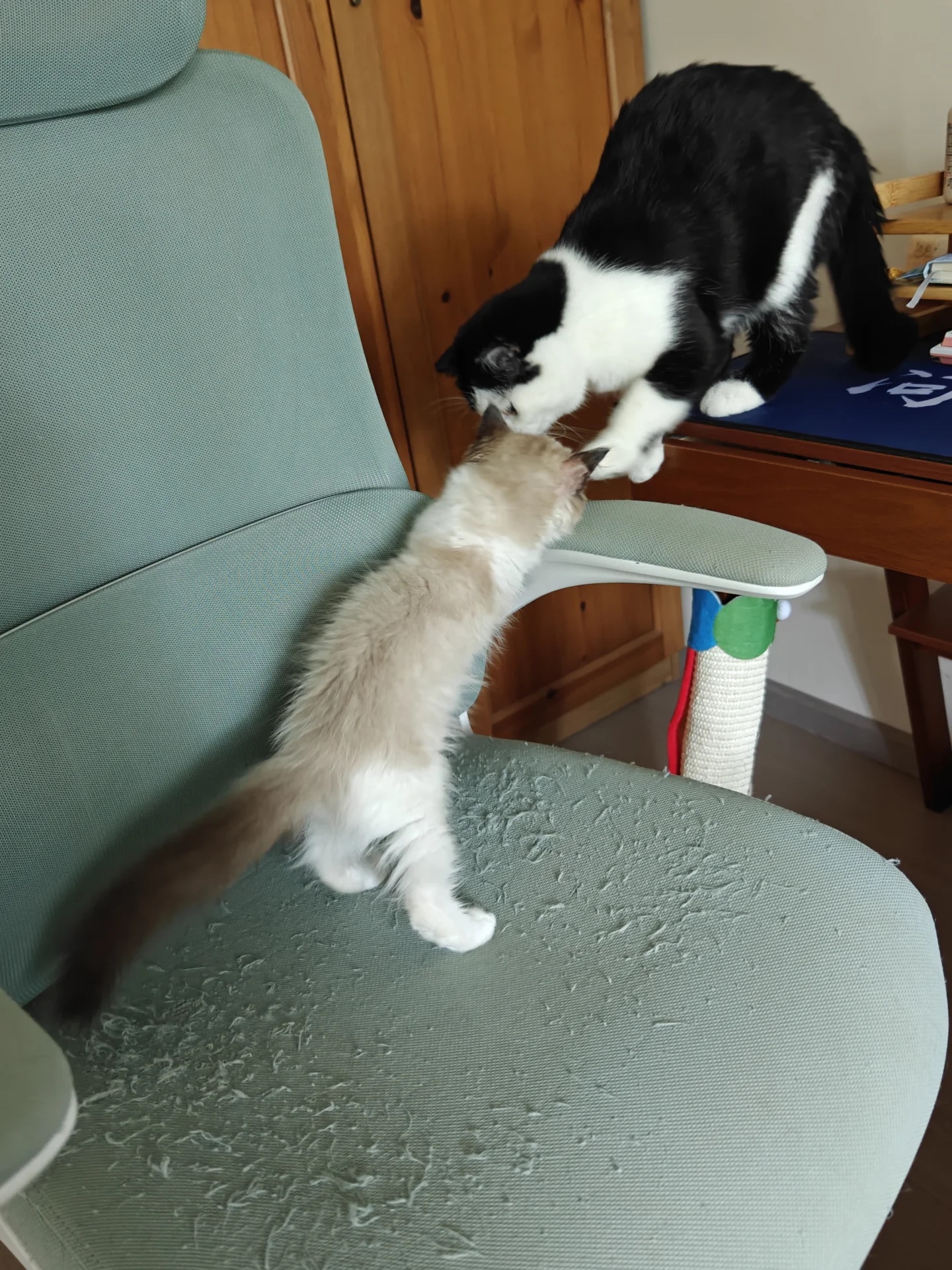
Five nights brought a quieter meeting. A household brought home a 66-day-old kitten on May 31 and used a separate room with its own food bowl and litter box; by the evening of June 5, the owner reported quiet contact and a peaceful night, with grooming seen later. The photographs show the two cats approaching each other; write down the behavior that changed before deciding whether to extend their next meeting.
Step 3: Add contact through a secure barrier
The next step should still let each cat withdraw. Begin with interaction on opposite sides of a closed door, then add short visual sessions through a secure screen, glass door, or suitable tall gate once both cats are comfortable. Check that the barrier prevents squeezing through or climbing into an unexpected meeting.
AAFP gives 5–20 minutes as a short play-session range for its closed-door and visual stages. Start at the comfortable end and finish earlier if either cat loses interest or becomes tense. A food reward or a toy can accompany calm observation, with enough distance for each cat to engage without fixating on the other.
Use the table below during the session. The response belongs to the more uncomfortable cat: one cat approaching eagerly is not enough if the other is crouching or trying to hide. End the exposure calmly, let both settle in separate areas, and restart from a stage they previously handled comfortably.
What you observe
What to do next
Both cats investigate, then return to play or rest
Repeat this level before making the next exposure harder
Hissing, growling, fixed staring, or repeated tail flicking
End the session and restore visual separation
A cat camps at the transition-room door
Add distance and a second visual barrier outside the door
Blocking a passage or pursuing a retreating cat
Separate safely and return to easier introductions
Either cat cannot settle afterward
Keep the next session at an earlier, calmer stage
A four-day diary recorded room changes. Another owner kept the resident cat in its familiar living room and the newcomer in a bedroom, with two sets of bowls and toys, and exchanged toys during the early separation. By the fourth day, the diary included nose-sniffing and play; preserve each cat’s familiar resting area while you record whether both can approach and leave freely.
Step 4: Supervise short shared visits
Once calm visual sessions are repeatable, prepare a large room with retreat routes and hiding options. The AAFP handout describes controlled physical access using positively trained harnesses and leashes, or a partially covered carrier the cat already finds comfortable. Prepare those skills before using them for an introduction; enlist a helper for the controlled setup.
Keep a cushion, large piece of cardboard, or towel nearby to block sight if tension develops. Use the barrier to interrupt a stare, then guide the cats toward separate activities or spaces. Keep your hands clear of a conflict, and let each cat recover before trying another interaction.
Cat Friendly Homes’ introduction advice emphasizes gradual access and stepping back when tension appears. Keep early visits supervised, and separate the cats when you need to leave. Extend shared time after repeated comfortable visits, while retaining the separate resources they can use without competition.
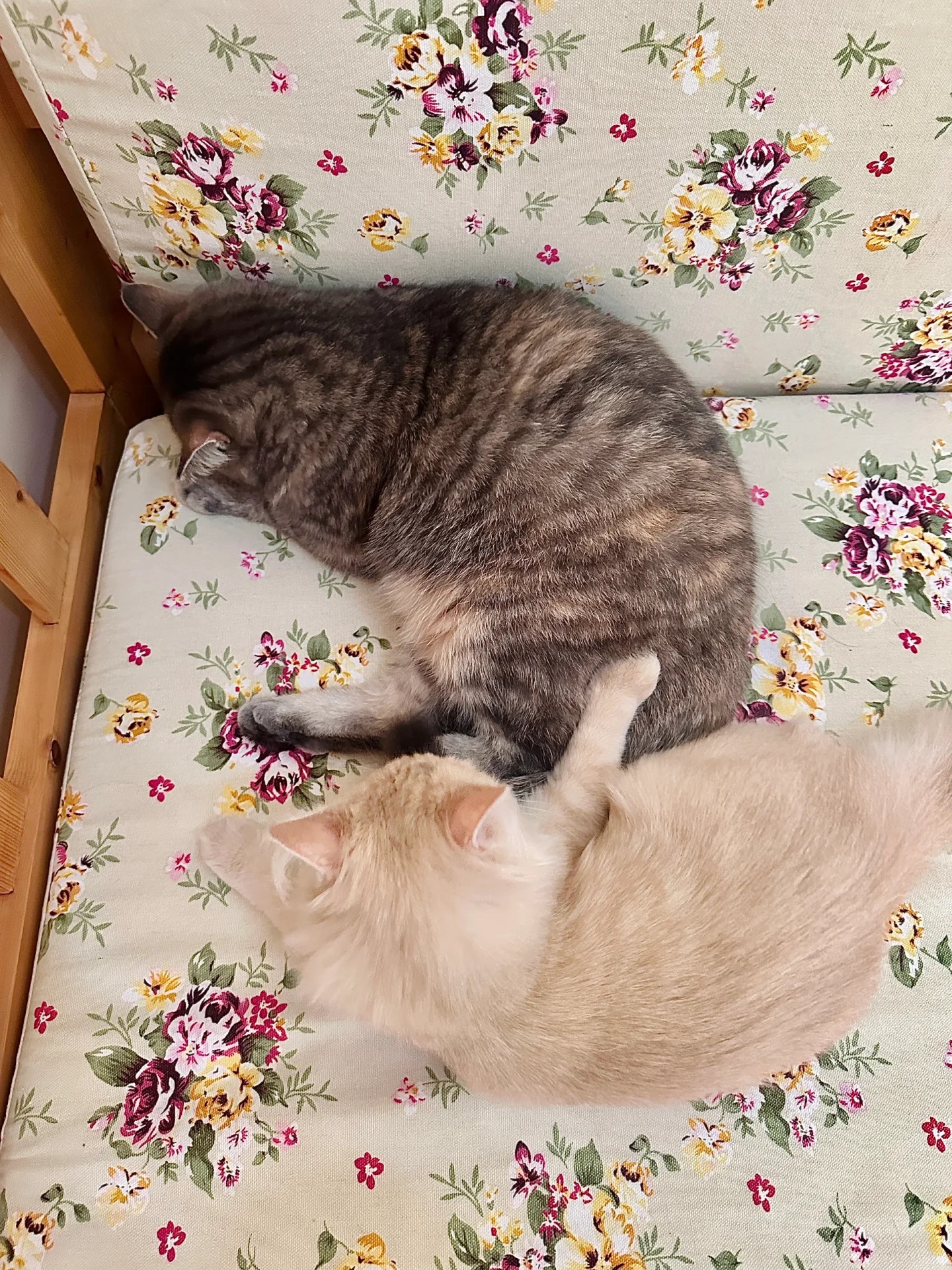
A month and then two more. One owner separated a two-month-old newcomer after the 18-month-old resident began hissing and hiding, then reported calmer coexistence after about a month and mutual grooming roughly two months later. A later photograph shows the pair resting together; log calm meals, resting, and free access to resources as useful progress before looking for grooming.
Keep progress tied to behavior
A simple session note can read: “screen between them; both took treats; one walked away; no pursuit.” Record the setup, what each cat did, and whether the next session should repeat, advance, or step back. The useful result is a home where both cats can eat, rest, play, and use their boxes comfortably.
Ongoing hiding, blocked resources, repeated pursuit, or reduced eating calls for veterinary or qualified behavior help. Bring the notes so the professional can see the pattern. For more on early reactions, see a resident cat hissing at a newcomer; the pace question belongs in how long cats take to get along.
FAQ
How do you get two cats to get along?
Begin with separate resources and a transition room, exchange scent, then add controlled sight and supervised access. Repeat comfortable stages and step back when either cat becomes tense.
How do you make cats get along without rushing them?
Record how both cats respond to each exposure. Calm play, rest, and voluntary withdrawal are reasons to repeat a successful setup; hissing, fixed staring, and blocking call for more separation.
When should you give up on cats getting along?
Seek professional help when tension keeps returning or either cat cannot use its resources comfortably. Separate living arrangements may be needed while a plan is developed; friendly grooming is an optional outcome, not the test of a workable home.
My two girl cats hate each other. What should I do?
Restore separate spaces and resources, then restart with scent exchange and a secure barrier at a level both cats handle comfortably. Record staring, blocking, chasing, and each cat’s access to food and litter boxes. Persistent tension needs professional help; being two females does not identify its cause.