Unplug the fountain, empty it, separate the washable parts, brush the bowl and accessible pump parts, then rinse, reassemble, and refill before restoring power. Wash the drinking bowl daily; the three models below call for full cleaning every 3–14 days, pump cleaning every 1–2 weeks, and filter replacement every 2–4 weeks. The cases below compile publicly shared household experiences rather than controlled tests.
Put four different jobs on the calendar
A filter change leaves the bowl, pump cavity, and connecting tubes to clean separately. The CDC recommends washing water bowls daily in its pet-supply cleaning guidance. Make that a daily fresh-water and drinking-surface routine, with a separate reminder for the deeper jobs.
These are schedules for specific models, not brand-wide intervals. Use the schedule supplied with your own model; multiple pets, visible debris, and local water conditions can mean earlier attention.
Task
Drinkwell Original, PWW00-13704
Petlibro Capsule, PLWF002
Catit Stainless Steel Flower Fountain, 43747W
Fresh water and drinking bowl
Daily bowl wash; check level and refill as needed
Daily bowl wash; keep water between MIN and MAX
Daily bowl wash; maintain enough water to submerge pump
Full fountain clean
Once a week
Every 2 weeks
Every 3 days
Pump interior
Every 2 weeks
Every 2 weeks
Weekly
Filter
Replace every 2–4 weeks; sooner with multiple pets
Replace filter and foam every 2 weeks
Rinse every 3 days; replace every 3–4 weeks or sooner when clogged
Write the next full-clean, pump-clean, and filter-change dates separately. Leave a bowl of fresh water available while the fountain is being washed; water-bowl placement matters when choosing that temporary spot, too.
Gather brushes that fit the hidden spaces
A soft sponge handles broad surfaces. Smaller tools reach the passages shown in the manufacturers’ pump diagrams and the household photographs below. Keep a dedicated cleaning set and choose bristles that enter the space easily.
Tool
Where it helps
Small bottle brush
Reservoir corners, spouts, and wider removable outlets
Narrow pipe brush
Removable silicone tubes and straight connecting passages
Clean, soft old toothbrush
Intake grilles, cover edges, and seams
Cotton swabs
The exposed impeller well and narrow recesses; remove loose fibers afterward
Small interdental brush
Tight accessible corners that a larger brush misses
Shallow tray
Holds the covers and impeller clear of the sink drain
Petlibro illustrates a small cleaning brush reaching the pump cavity. Catit also describes cotton-swab cleaning for the impeller well in its round fountain’s instructions. The tool-to-part list above turns those approaches into a practical kit; use gentle strokes and rinse away loosened particles.
Step 1: Disconnect and lay out the parts
Disconnect power with dry hands before emptying the fountain. Keep the plug, adapter, and electrical connections dry. Set the tank, tray, filter holder, and removable tubing beside the shallow tray so you can see what still needs washing.
Check the pump diagram for an outer cover, an impeller cover, and a removable impeller—the small spinning part. Photograph their arrangement before taking them apart, and leave sealed components intact. The user-removable pieces are the cleaning job; repairs to the motor belong with the manufacturer.
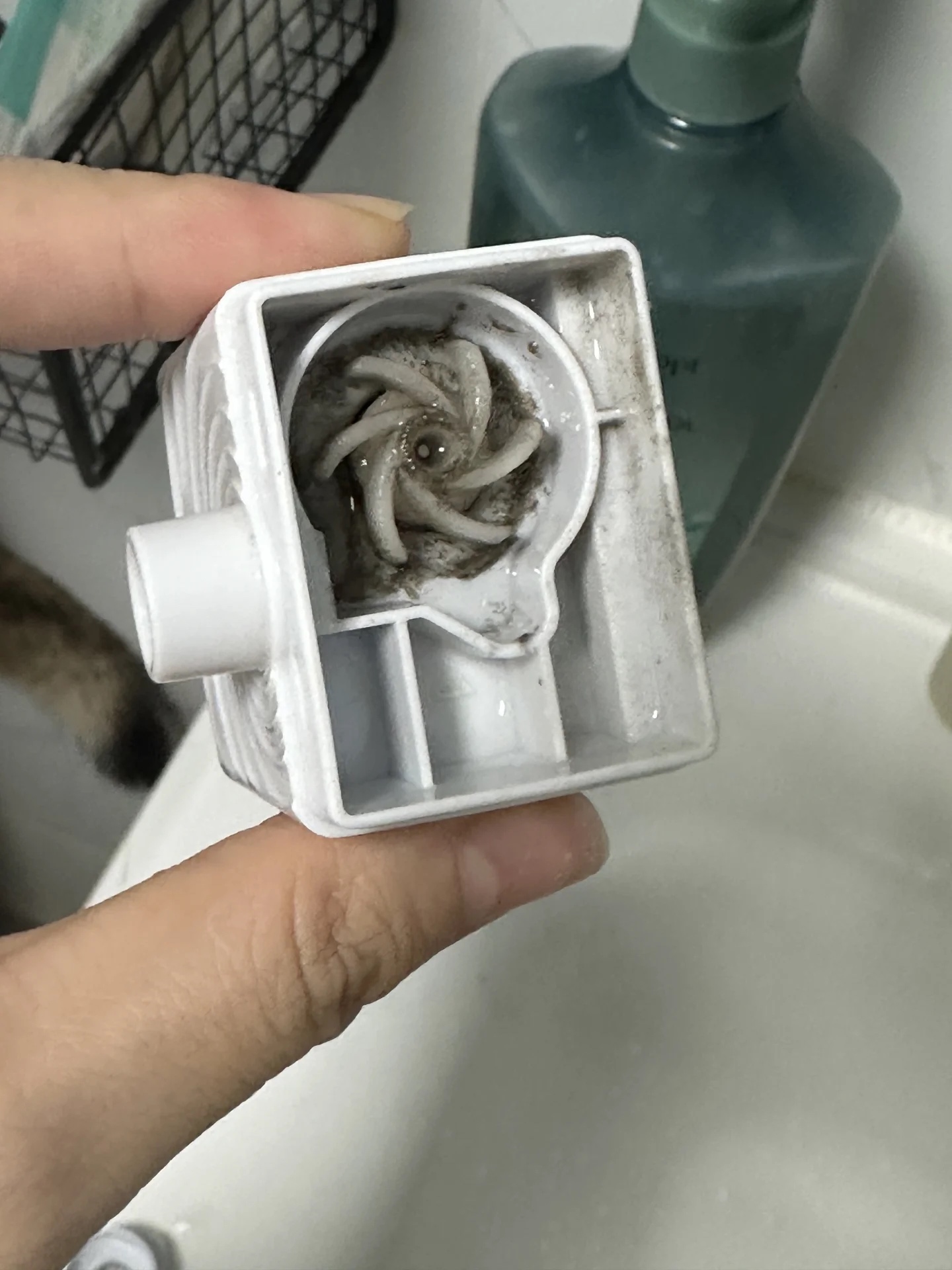
A narrow brush reached the recess. One owner had been removing hair whenever the filter was changed, then opened the pump for the first time and found gray-brown deposits around its curved impeller blades. The owner used an eyebrow brush to reach the awkward spaces; add a small, soft cleaning brush to your kit for recesses the sponge cannot reach.
Step 2: Wash the bowl, tank, and filter holder
Empty the old water, lift out the filter, and wash the reservoir and drinking surfaces with a soft sponge and a mild cleaner approved for their material. Work around the underside of the tray, lid seams, and filter holder. Rinse until the surfaces and channels are free of suds and loose debris.
Separate dishwasher-safe parts from hand-wash parts. For example, the Catit Flower Fountain guide allows dishwasher cleaning of the stainless steel top, while the Drinkwell guide keeps its pump out of the dishwasher. Washable metal and electrical parts need different handling.
Rinse reusable filter components with water as specified for the model. The Drinkwell and Catit guides keep soap off the carbon filter; Petlibro schedules replacement of both its filter and foam every two weeks. Put the replacement date on the calendar when fitting a new one.
Step 3: Brush the accessible pump interior
Remove the serviceable covers in the illustrated order, then lift out the removable impeller using the tool supplied for that design. Brush the exposed well, cover openings, and impeller gently under running water. Keep the small parts together on the tray until rinsing is complete.
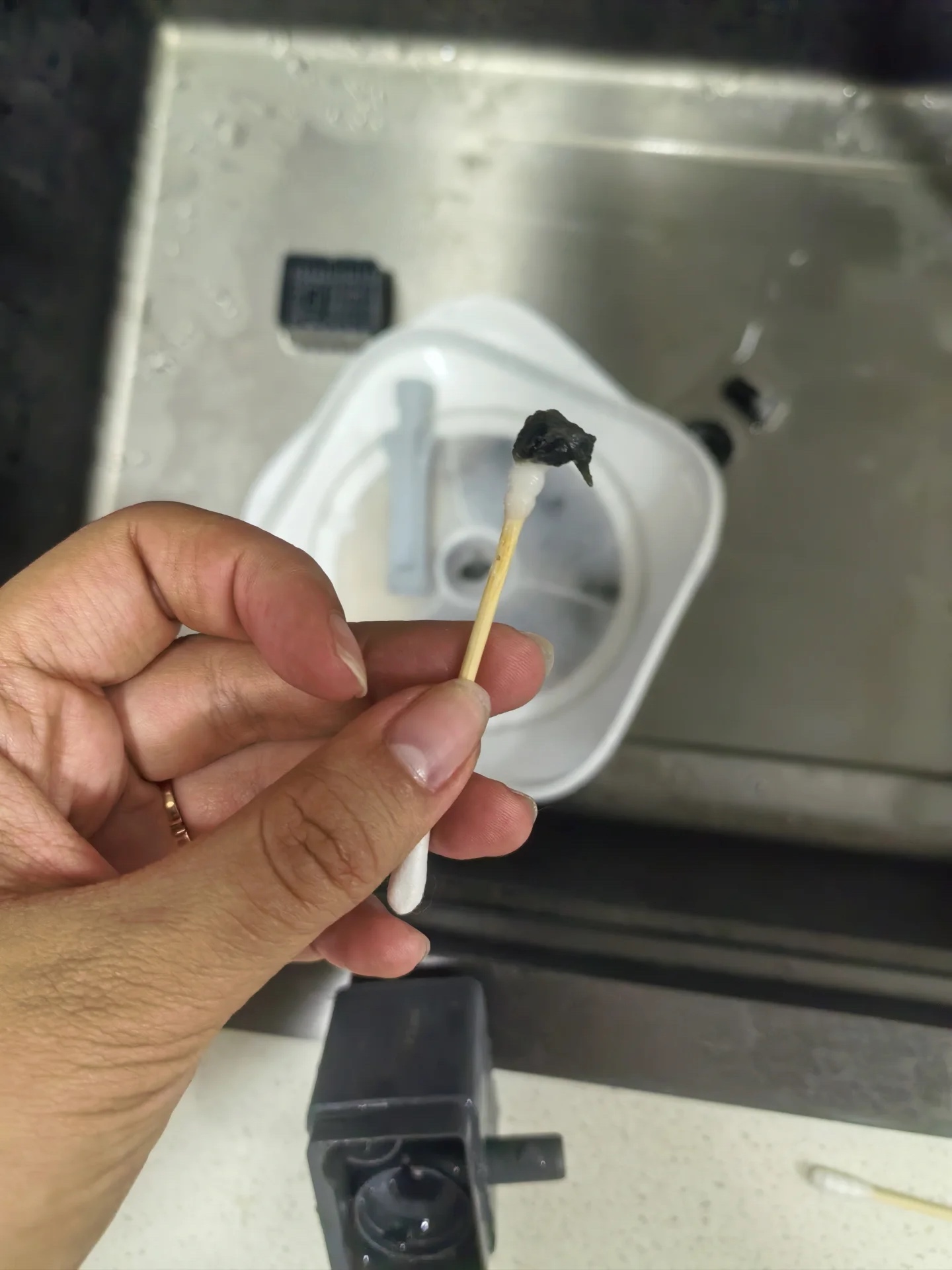
The swab showed what wiping missed. A second owner regularly replaced the filter and washed the fountain inside and out at water changes, but had never opened its slippery-feeling pump. On opening it, the owner photographed a cotton swab carrying dark clumps from the interior; check the exposed well with a fresh swab after brushing to find remaining debris.
Step 4: Follow the connecting passages
Trace the route from the pump outlet through the removable tube to the drinking tray. Pass a correctly sized pipe brush through accessible tubing and rinse it from both ends. Use the smaller brush around connector rims and recessed corners, where a broad sponge loses contact.
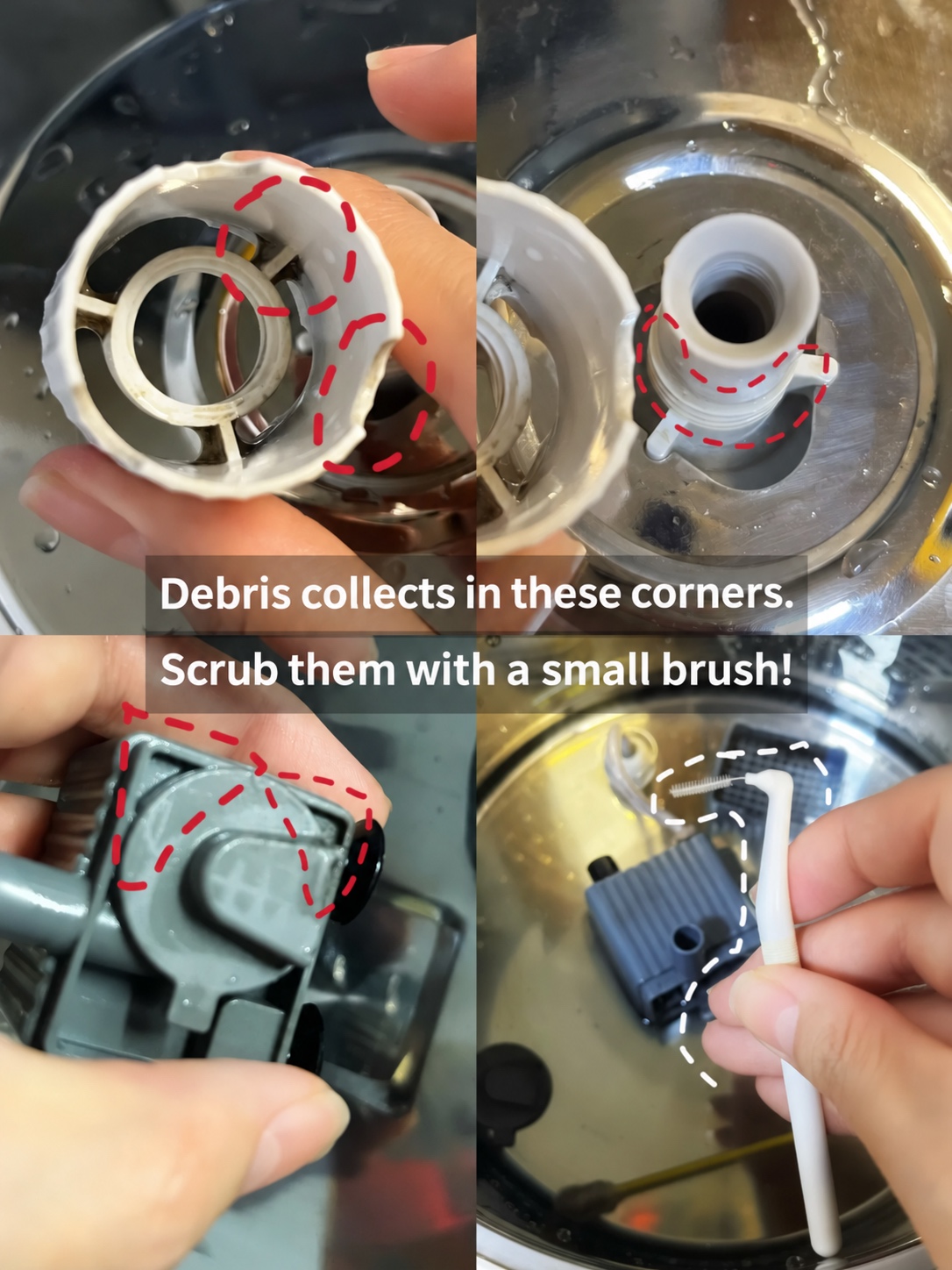
Four views exposed the corners. A third owner removed two pump covers and the impeller, using cotton swabs and an interdental brush to tackle the pump and the connections beneath the drinking plate. The photographs show dark residue in connector corners and the small brush beside the pump, followed by a fresh-water run to flush loose particles. Work around each removable connector’s inner rim before rinsing it.
Step 5: Reassemble, refill, and watch the first circulation
Replace the impeller, covers, filter holder, and tubing in their original positions. Seat the connections without pinching the tube, fill to the operating level, and dry your hands and the electrical connections before reconnecting power.
Watch for a steady stream, leaks, and unusual noise. If flow is weak, disconnect again and check the water level, tubing alignment, and accessible pump cavity. Mineral scale needs the manufacturer’s material-specific treatment; regular brushing and rinsing remain separate jobs.
Finish by recording the cleaning date and the next three maintenance dates. For a clean fountain that a cat still avoids, see ways to help a cat drink more water.
FAQ
How often should you clean a cat water fountain?
Wash the bowl daily. Across the three models above, full-clean intervals span 3–14 days, pump cleaning 1–2 weeks, and filter replacement 2–4 weeks; choose the row for your own machine.
How do you clean a cat water fountain pump?
Unplug it, remove its serviceable covers and impeller, brush the well and pieces gently, and rinse. Refit the parts and refill the fountain before reconnecting power.
Can you use a cat water fountain without a filter?
The Drinkwell Original guide permits filter-free operation. That permission is specific to that model; check whether your fountain requires its filter, and keep the same cleaning routine either way.