
Healthy adult cats commonly urinate about two to four times a day, but that reference is only useful alongside the individual cat’s routine. A scoop containing several clumps is not necessarily a record of the same number of bathroom visits. Track actual urine, the cat involved, and changes in its normal pattern rather than treating one day’s litter as a pass-or-fail test.
The household examples below come from publicly shared experiences, not a statistical study; diet, litter, observation, and individual cats differ.
Use the adult range as a starting reference
The Veterinary Referral Center of Central Oregon’s urination guidance gives an average of 2–4 urinations a day for healthy adult cats. It also emphasizes changes such as more frequent visits, increased drinking, and accidents. The useful comparison is with an adult cat’s established routine as well as that general range.
Write down whether you observed a bathroom event or simply found litter afterward. Include the period covered: a scoop after breakfast, a full day between cleanups, and several days of accumulated litter are different observations. A number without its time window is difficult to interpret.
Keep the counting method consistent while you learn the pattern. If one person scoops in the morning and another removes a clump later, both entries belong in the record. Otherwise, the evening count may look smaller simply because some of the evidence was already removed.
| What you counted | What it tells you | What to add to the note |
|---|---|---|
| A visible urination | An actual bathroom event | Time and cat |
| Clumps found while scooping | Waste collected since the previous cleanup | Cleanup window and litter type |
| A camera notification | An event the device detected | Whether urine was actually passed |
| Waste from a shared box | Household output | Which cat, if known |
Why clumps are an imperfect count
Check whether a clump is intact, broken into pieces, touching another one, or stuck to the tray. Those conditions change what reaches the scoop. Keep a description of what you found rather than converting every separate piece into another trip.
A photograph can help you remember the appearance, but it should be paired with the cleanup time. An isolated large clump tells you less than a consistent observation method used across ordinary days. Keep the usual litter and fill level steady while comparing the pattern.
The owner had a defined daily pattern. One household reported finding three urine clumps a day, with similar-looking clumps over the previous week, and photographed a scoop holding the litter. Note both the time window and the appearance when you record the next cleanup.
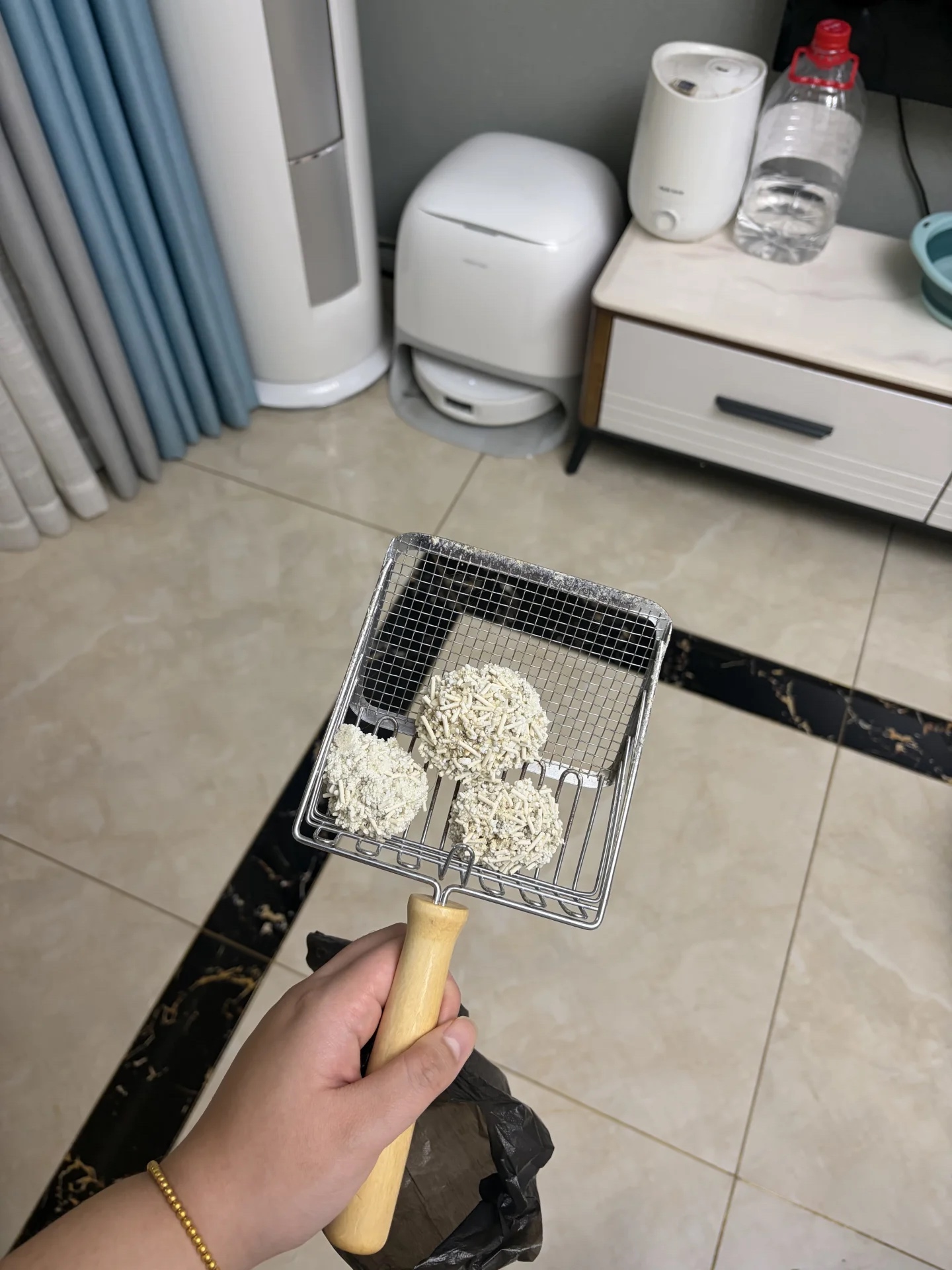
For litter that does not form distinct clumps, record actual visits or visible wet areas instead of inventing a clump count. If the box is automatic, check what its log measures: entries, weight events, cleaning cycles, and urinations need not be the same category.
Keep feeding and drinking context beside the count
Veterinarian Kelly St. Denis’s house-soiling assessment guidance recommends collecting diet, water intake, urine frequency, and changes in clump size together. That combination gives a clearer account than a count considered in isolation.
The two feeding records looked different. An owner described seven or eight clumps on wet-food days and five or six on dry-food days for the same cat. Keep a brief note of the food actually eaten and the observation window beside the litter record.
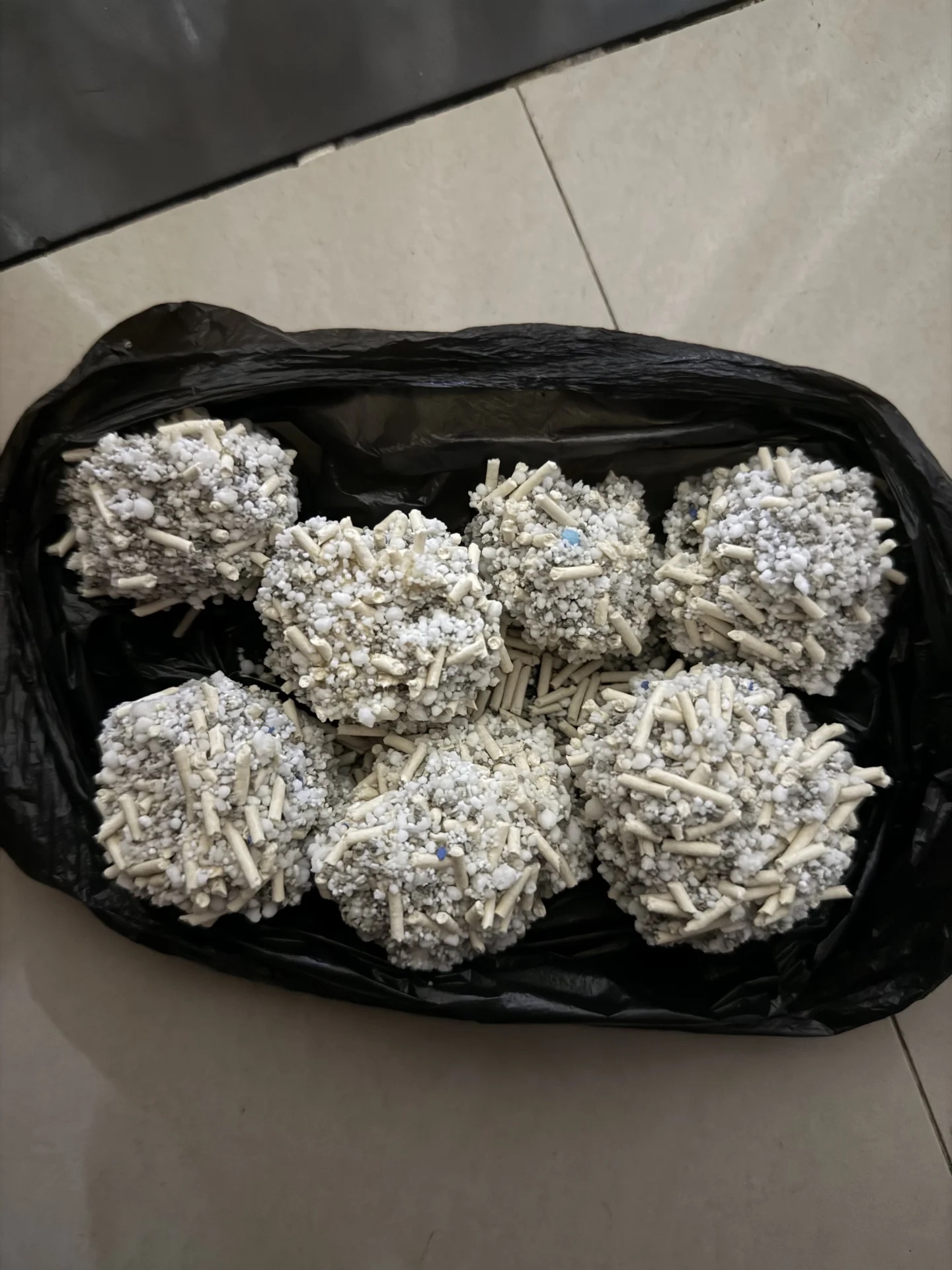
Wet food supplies more water than dry food, as Cornell’s feeding guidance explains.
Veterinarian Lisa A. Pierson’s feeding guide notes that switching to a more water-rich canned diet can increase urine output, so more litter to scoop can be an expected change. Keep the same diet and counting method when comparing days; the clump count alone does not confirm normal health.
Record a change in food format or routine without turning it into an experiment to make the cat hit a target number. Keep fresh water available. A day when the cat ate differently, a bowl was moved, or somebody else cared for it deserves context in the note.
For the question “how long after drinking will the cat pee?”, use observed bathroom visits rather than starting a fixed countdown after each drink. The adult daily range does not provide a drink-to-toilet timetable. If you are monitoring a change, record both events when you see them and take the resulting pattern to an assessment.
In a multi-cat home, identify the cat before dividing
Six clumps belonged to a shared household. An owner photographed six clumps before an evening scoop in a home with two cats. Identify actual visits where possible instead of dividing the total evenly between the cats.
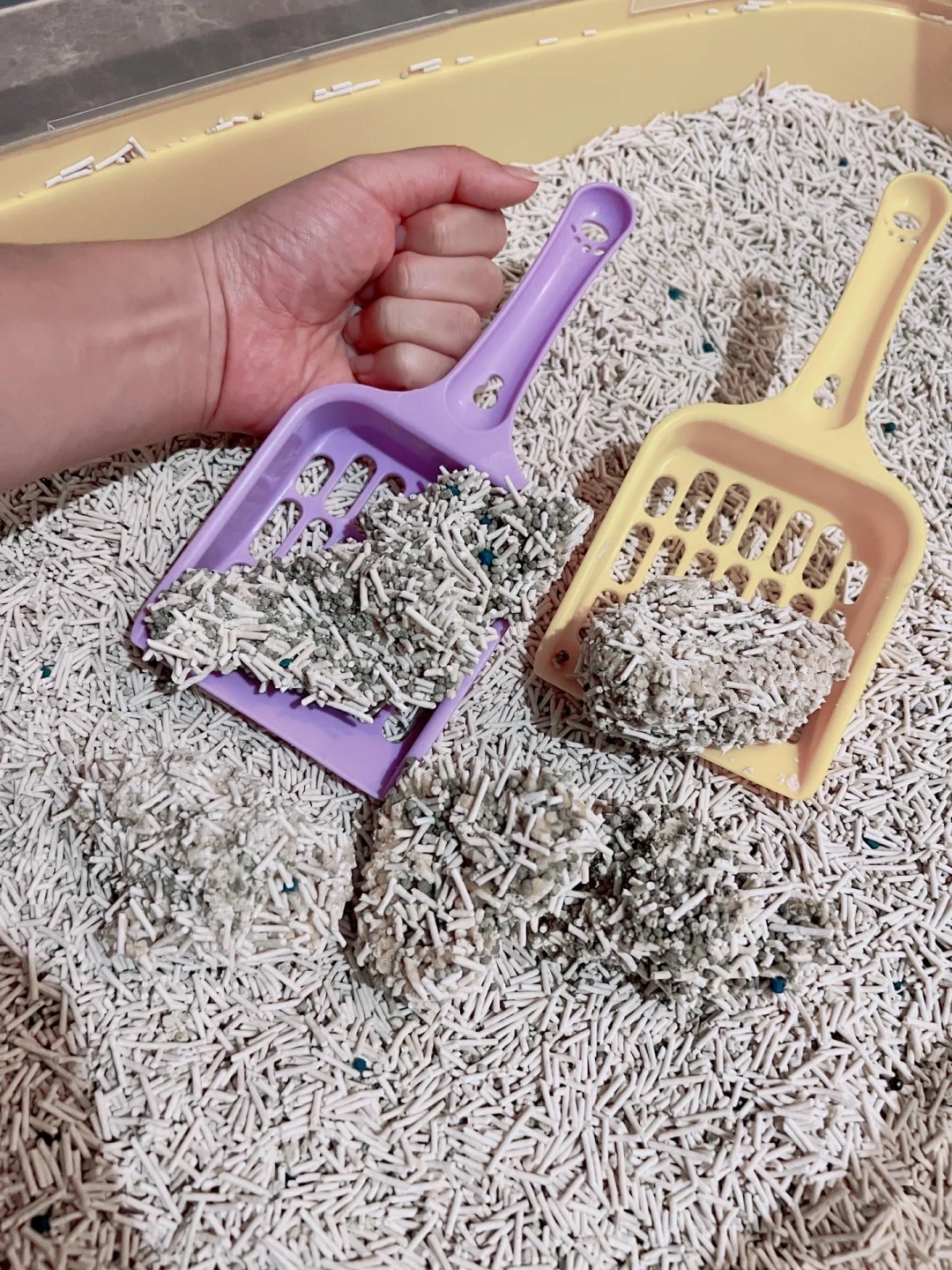
Keep access comfortable while observing. Watch ordinary visits or use an existing camera view with a clear approach and exit. Match the cat and the event before assigning it to an individual record. A larger clump by itself is not a reliable identity label.
If you cannot identify the cat, write “shared box, cat unknown.” That entry is more useful than a confident-looking split that was never observed. Note separately whether each cat has been seen using an accessible toilet elsewhere in the home.
Kittens need an age-appropriate reference
Bottle-fed kittens are a different situation from independent adult cats. Best Friends Animal Society’s bottle-feeding guide describes urination after each feeding and assistance with elimination in very young kittens. Their feeding and care records are the relevant framework, rather than an adult daily average.
For a kitten already using a tray independently, keep its age, food, and actual visits in the note. Make the toilet easy to find and enter. If you are caring for an unweaned kitten, use an established neonatal care plan with the rescue or veterinary team rather than improvising around the adult range.
Cornell’s urinary-tract guidance explains that male cats have a longer, narrower urethra than females and are more prone to blockage. A male cat repeatedly squatting with little or no urine needs immediate veterinary attention. Count actual output, not just attempts to use the box.
Make the routine easy to monitor
ASPCA litter-box guidance recommends daily waste removal and enough accessible toilets: one per cat plus one extra. Regular cleanup also gives your observations a clear starting point.
Use a short record with the date, cat, observed visit, clumps removed, and any change in food or access. Photograph an unusual finding if useful, then continue the normal cleaning routine. Keep the cat’s ordinary access to food, water, and a familiar toilet while observing.
When a changed pattern needs prompt assessment
Seek veterinary assessment for a persistent change, increased drinking, or new accidents. Repeated straining with little or no urine calls for urgent help; inability to pass urine is an emergency in the Veterinary Referral Center of Central Oregon’s guidance. A cat’s repeated box entries should never be counted as reassuring urinations unless urine was actually produced.
FAQ
How many times a day should a cat pee?
The Veterinary Referral Center of Central Oregon gives about two to four times daily for healthy adults. Compare the individual cat’s established routine and actual output, not just a bag of collected litter.
What is a normal cat pee clump size?
There is no single clump size to use across different litters and cleanup methods. Keep conditions consistent and record changes in appearance alongside actual bathroom visits.
How can you tell whether a cat peed in the litter box?
Look for urine or its wet/clumped litter evidence and record the cleanup window. For a shared or automatic box, confirm the cat and event where possible rather than equating every entry or cleaning cycle with urination.