
Start with the automatic litter box switched off, keep a familiar conventional box available, and let your cat approach and use the new one voluntarily. Keep the litter familiar where the machine allows it, then introduce a cleaning cycle only after comfortable use. A cat that keeps avoiding the entrance may need a different setup rather than more persuasion.
The household examples below come from publicly shared experiences, not a statistical study; individual cats and equipment differ.
Start with a usable toilet, then add automation
The first goal is an ordinary bathroom visit inside a stationary box. Movement, motor noise, an unfamiliar opening, and a different substrate are separate changes. Presenting them together makes it harder to see which part your cat dislikes.
Whisker’s acclimation instructions begin with the machine off and the old box beside it. They also suggest adding a scoop of familiar used litter to compatible fresh litter. Check compatibility first: the litter that worked in a plain tray may not work with a machine’s sifting mechanism.
In a two-cat household, the owner initially switched off automatic cleaning, placed the original box nearby, and transferred some used litter. There were still accidents on the mat on the third day before a later update described successful adjustment. Keep the familiar toilet available while you watch for voluntary use.
Set up a simple observation note before changing anything else: which cat entered, whether the machine was off, whether urine or stool appeared, and whether the cat returned. A sniff at the doorway is exploration. An actual elimination followed by another relaxed visit is a more useful sign of progress.
Make the entrance easy to investigate
A clear approach matters as much as the mechanism. ASPCA litter-box guidance emphasizes easy entry, adequate room, quiet locations, and an escape route. Fit the new machine into that arrangement rather than squeezing it into a noisy laundry corner simply because an outlet is nearby.
Check the route from your cat’s normal resting area. Can the cat walk up without passing a dog’s bed, stepping across a slippery mat, or being cornered by another cat? Keep electrical cords outside the approach. Use the manufacturer’s compatible ramp if the entry is difficult; the ramp should sit firmly and leave the opening unobstructed.
Watch the body, too. A cat that can put its head through the opening may still struggle to turn or settle inside. Compare the space with the positions the cat normally uses in its old tray. An enclosed interior can feel different even when the outside dimensions look generous.
A doorway visit was not acceptance. One owner described a cat investigating the machine on the first day and ignoring it on the second; the owner felt the interior was cramped and planned to give it away. Before extending training, check whether your cat can enter, turn, and adopt its usual toileting posture comfortably.
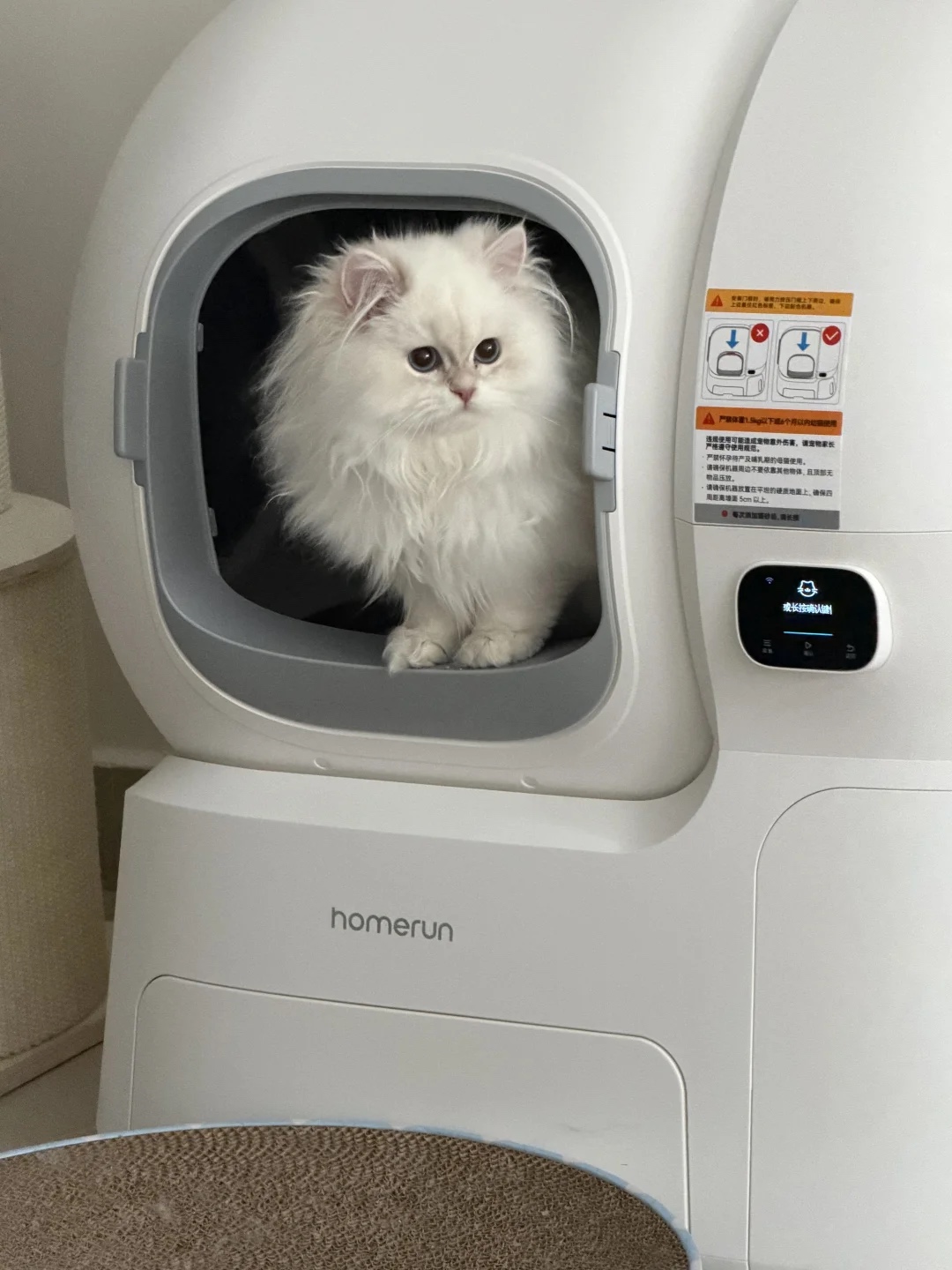
Keep the familiar parts familiar
Keep the new unit close to the existing toilet during the introduction, with enough space to enter either one. Use the familiar litter only if it matches the new unit’s requirements. Start with its stated fill level: an automatic box’s maximum line takes priority over a generic depth recommendation.
If a litter change is unavoidable, give that change its own trial in a conventional tray before expecting the cat to accept a moving machine. Changing the toilet shape and litter texture together leaves two possible explanations for refusal.
Keep both options usable. A dirty fallback box creates pressure without showing whether the new one is genuinely comfortable. Maintain the regular scooping routine, and measure progress by where the cat chooses to eliminate. Avoid lifting the cat into the opening or moving its paws through the litter; voluntary exploration gives you clearer feedback.
Reward a small step without crowding the box
Place a treat near the approach or on the machine’s step when your cat is relaxed. Let the cat choose whether to move closer, and reward a comfortable interaction. Move away afterward so that the box remains a private toilet rather than a place where someone waits expectantly.
Two cats, two responses. With the same newly purchased machine, one household’s orange cat had begun using it while the other cat stayed nearby watching. Track each cat separately and retain an accessible conventional box for the one that is still hesitating.
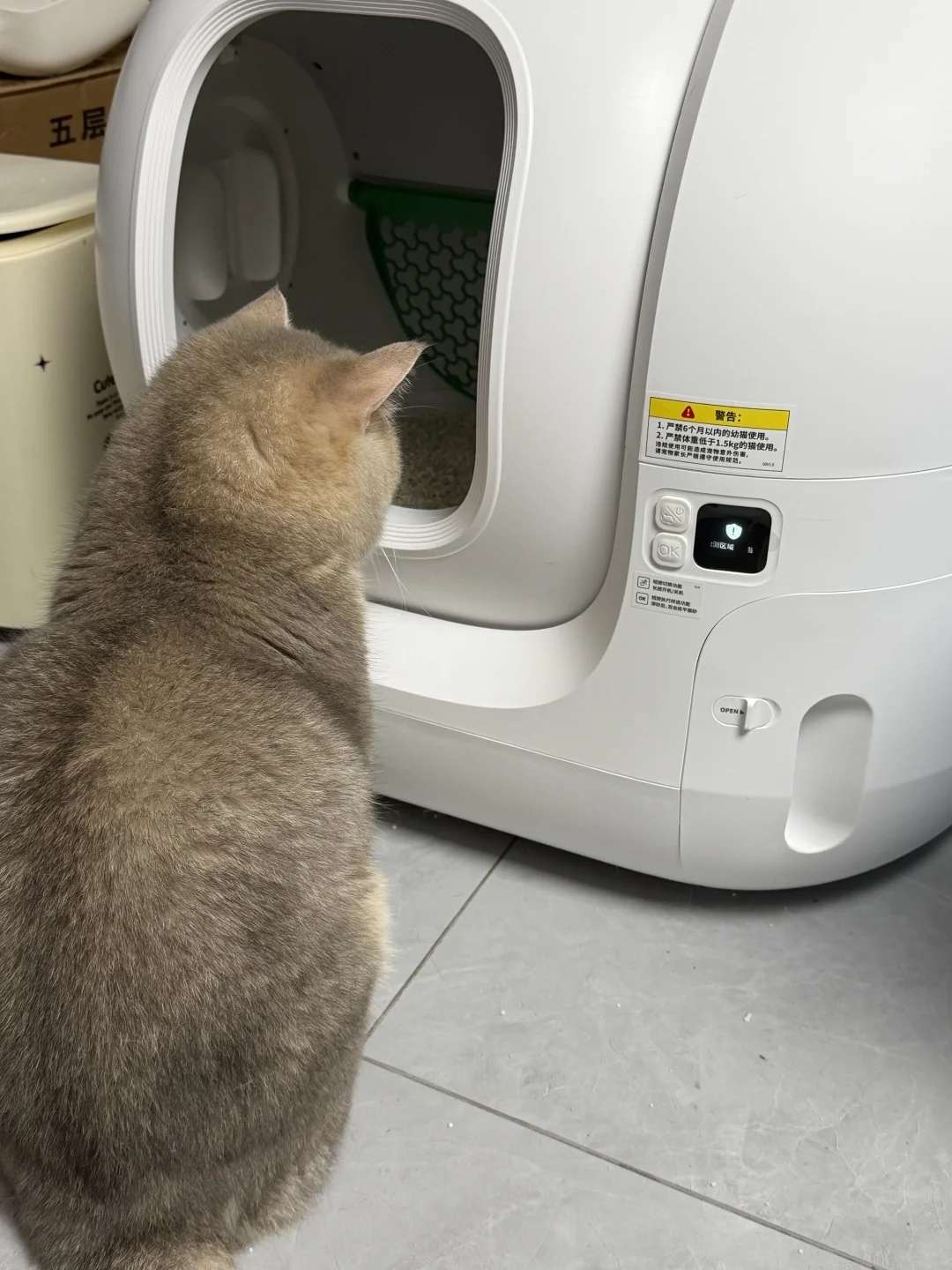
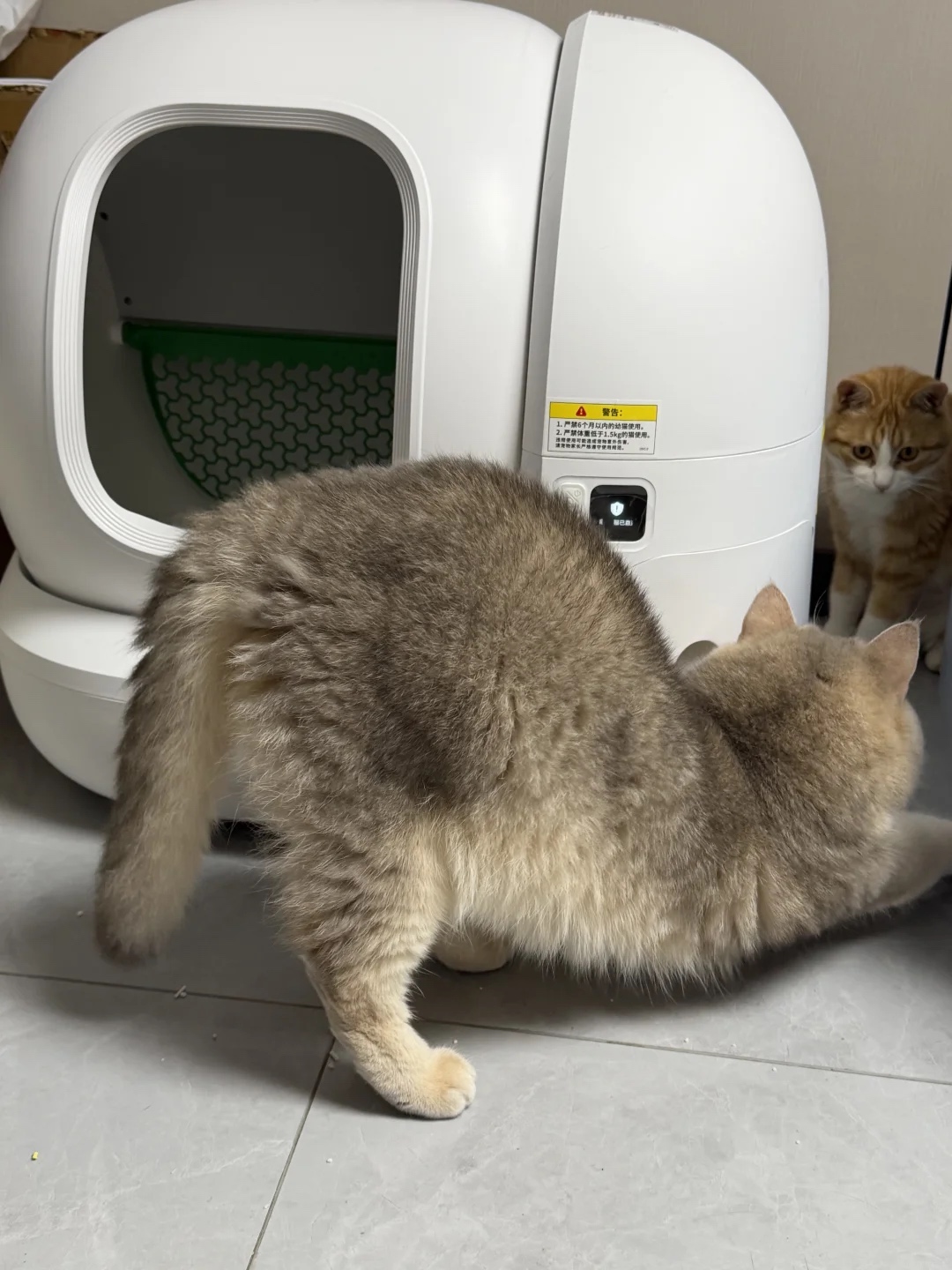
A shared household needs an individual progress check. Finding waste in the drawer proves that a cat used the unit, but it may say nothing about the quieter cat. Watch a few routine bathroom visits without hovering, or review an existing camera if it covers the entrance clearly.
Introduce the cleaning cycle separately
After the cat has begun using the stationary box comfortably, run a cycle while the cat is outside it and free to leave. Remain nearby, keep the approach clear, and watch the response. If the movement sends the cat away and it subsequently avoids the box, return to the stationary stage and retain the familiar tray.
Automatic-operation requirements differ by model. Whisker lists a minimum of 3 pounds for Litter-Robot 4 and 5 pounds for Litter-Robot 3. Those figures belong to those models; they are not a general rule for every automatic box or every kitten. Check the exact device’s current weight and age requirements before enabling automatic operation.
Keep a note of the first cycle and the next bathroom visit. A cat watching from across the room is different from a cat repeatedly approaching and retreating without eliminating. The useful question is whether the cat continues using the toilet after automation begins.
Decide when to pause or change the setup
Accidents, repeated hesitation, or a return to the old box call for a setup review. Cornell’s house-soiling explanation includes health problems as well as aversion to the box, litter, or location. A sudden toileting change deserves veterinary assessment rather than an assumption that training is the only issue.
Return to the last comfortable arrangement if the cat starts avoiding the toilet. Check the entrance, interior room, litter compatibility, noise, and route one at a time. If a machine remains unsuitable, continuing with a conventional box is a workable outcome.
FAQ
How long does it take a cat to use an automatic litter box?
Whisker describes adjustment ranging from several days to weeks or longer. Use comfortable, repeated toileting as the milestone rather than removing the old box on a preset day.
Can kittens use a self-cleaning litter box?
Only under the exact model’s stated conditions. Weight thresholds and operating modes differ; a kitten being able to climb inside does not establish eligibility for automatic cleaning.
Can you use regular litter in a self-cleaning litter box?
Use litter compatible with the particular sifting system and fill line. Keep a familiar suitable litter when possible, and separate any necessary substrate change from the machine introduction.