
A cat peeing in the bathtub may be avoiding something about its litter box, preferring the tub’s surface or location, or experiencing a health problem that changes toileting. The place alone cannot tell you which explanation applies. Keep a usable litter box available, record the pattern, and assess the toilet setup rather than treating the puddle as misbehavior.
The household examples below come from publicly shared experiences, not a statistical study; individual cats and bathroom arrangements differ.
The bathtub is a clue, not the whole explanation
Cornell’s explanation of house-soiling separates health problems, litter-box aversion, and preferences for another surface or place. It specifically includes bathtubs among the hard surfaces where a cat avoiding its box may eliminate. A cat may still use the litter box sometimes, so occasional normal visits do not settle the question.
Start with what you can actually observe. Is the tub the only alternative toilet, or are there puddles on clothes and floors as well? Does the cat walk past an available box to reach it? Was a lid, litter, location, or cleaning product changed shortly before the first accident?
Those questions give you a useful description without guessing at the cat’s motive. Take a quick note of the date, place, visible urine, and which toilets were accessible. Keep this separate from a guess such as “angry about being left alone.” The practical next step depends on the observed pattern.
Check whether the litter box is harder to use
ASPCA litter-box guidance identifies small boxes, uncomfortable covers, poor access, unsuitable litter depth, and insufficient cleaning as common management problems. It suggests large, accessible boxes and a shallow 1–2-inch litter bed for a conventional tray. It also recommends one box per cat plus one extra.
Walk the cat’s route from its usual resting place to the box. Check for a closed door, a high step, a noisy washer, a dog resting nearby, or another cat waiting in the passage. A bathroom can be easy to enter while the actual tray inside it is awkward to reach.
If the current box has a flap or cover, compare it with an open tray. Keep the familiar litter and the existing toilet available during that comparison. Changing the container, substrate, and room at the same time makes the outcome difficult to interpret.
Use the table below to choose the first comparison. It is a setup checklist, rather than a way to identify a disease from where urine appears.
| What you observe | What to check | A practical next move |
|---|---|---|
| The cat approaches the box and backs away | Door flap, lid, entry, room to turn | Offer an accessible open tray with familiar litter |
| The tub is available but the box is behind a closed door | Continuous access | Keep the toilet route open |
| Accidents began after a litter change | Texture and scent | Offer the previously accepted litter in a separate tray |
| Another pet waits beside the box | Approach and exit routes | Add an independently accessible toilet location |
| The cat returns despite bathroom cleaning | Toilet choice and remaining odor | Review both the box setup and the cleaned surface |
Cleaning the tub does not fix every cause
The cleaning loop kept repeating. One owner repeatedly washed the bathtub and used an odor-removal spray, yet the cat continued choosing the tub. If the same location keeps being used, pair cleanup with a review of the cat’s available toilets.
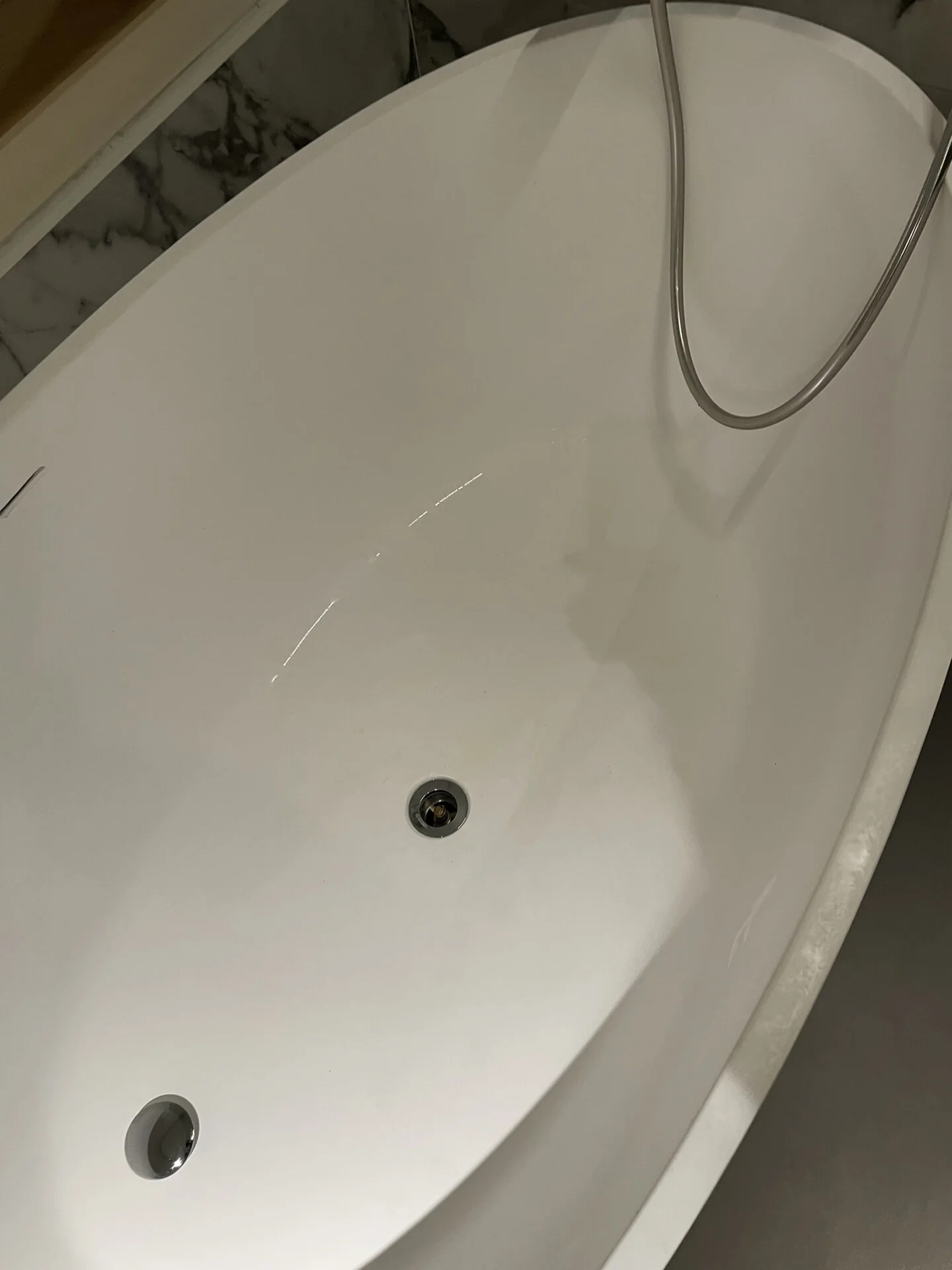
Remove the urine promptly and use a product compatible with the tub’s surface. Keep the cat away while cleaning, rinse or dry as the product requires, and leave the bathroom ready for normal use. Check around the drain, bath mat, and any items left inside rather than cleaning only the most visible patch.
The useful distinction is between removing an accident and changing the conditions around the next bathroom visit. A clean tub can still be the cat’s preferred location if its litter box remains difficult or unpleasant to use. Repeated scrubbing is therefore a reason to widen the check, not simply to apply a stronger scent.
Avoid using the tub as a place for punishment or startling the cat away. Keep the bathroom routine calm while you restore an appealing alternative toilet. Strong smells and confrontations add another change without showing why the cat started going there.
Compare locations without removing the accepted option
When a cat favors a particular place, the ASPCA suggests trying a box in a different location or adding boxes in several locations. Look for a quiet approach with room to see another animal coming and more than one way to leave the area.
If the bathroom is the favored room, consider an accessible tray nearby on a stable, dry floor. Keep it separate from the tub’s wet or slippery interior. Preserve the accepted existing tray as well, then watch which option the cat uses.
Keep the trial simple: familiar litter, an open entrance, and a consistent scooping routine. Record actual urine or stool in each place. A cat sitting in the new tray or playing with its edge is not yet evidence that it has adopted that toilet.
The tub had become a daily destination. Another owner reported daily bathroom accidents and described the bathtub as a giant litter box. Record which location is actually used before changing the tray’s placement, then compare the next visits with that starting pattern.
Use the timeline without assuming a cause
An owner of a female cat approaching one year old described one tub urination each day and recalled a blow-dryer scare the week before. That gives two useful entries for a timeline: the observed frequency and a recent household event. Write them down separately when reviewing what changed.
Also note when a door began staying closed, guests arrived, another pet entered the home, or the litter changed. Keep the record short enough that everyone who cares for the cat can maintain it. A date, an actual event, and the accessible toilets are more useful than a long list of presumed triggers.
After an adjustment, compare the same observations again. Did the cat use the added tray? Did tub accidents continue? Was a second change introduced before you could see the result? Keep the familiar toilet in place while answering those questions.
When to seek help rather than extend the setup trial
Cornell recommends veterinary assessment for house-soiling because a cat with a health problem may not otherwise look ill. Arrange that assessment for a new or recurring toileting change; a bathroom-location checklist cannot rule out discomfort.
If the cat repeatedly strains while producing little or no urine, treat that as an urgent problem. The Veterinary Referral Center of Central Oregon’s urination guidance identifies inability to pass urine as an emergency. Keep the observation note available so that you can describe what happened accurately.
FAQ
Why does a cat pee in the bathtub?
Possible explanations include litter-box aversion, a preference for the tub’s surface or location, and a health problem. Check access and recent changes, while arranging assessment for a new toileting problem.
How can you stop a cat peeing in the tub?
Clean the accident, keep a familiar toilet usable, and test an easy-entry box with familiar litter in an accessible place. Observe actual visits and change one feature at a time.
Does using the tub mean the cat dislikes its litter?
Litter texture or scent is one possibility, alongside box shape, location, cleaning, and access. Offer a controlled choice instead of replacing every bathroom feature at once.