
Yes, a suitable vacuum can pick up small amounts of dry, loose cat litter scattered around the box. Scoop waste and collect damp clumps separately; the fact that a machine handles dry grains does not make it suitable for wet or soiled litter. Check the machine’s approved materials before using it for this job.
The household examples below are drawn from publicly shared experiences, not a statistical study; litter, machines, and floor conditions vary.
Separate scattered litter from litter-box waste
The useful distinction is between clean, dry tracking on the floor and the contents of the toilet itself. BISSELL explicitly describes the hard nozzle on its PowerLifter 33A1W as suitable for dry messes including spilled cat litter. That is a concrete example of approved use, rather than evidence that every vacuum can handle every litter.
Before switching on, look at the debris instead of treating the whole area as one pile. Separate loose grains, hair, damp material, and any stool. A dustpan is useful for the larger dry spill; bag the toilet waste through your normal litter-disposal routine.
This also keeps a small floor-cleaning task from becoming a machine-cleaning task. If the floor has both tracked grains and a wet patch, collect the wet material first, clean the patch with a surface-compatible method, and reserve ordinary dry vacuuming for dry debris.
Check the vacuum and floor before starting
Find the model number and look for the approved debris types, filter requirements, and emptying instructions. A product being marketed for pet hair is not enough information: hair, gritty particles, and liquid are different cleaning jobs. A dry-only machine needs a dry-only task.
Check the floor attachment as well. Use a head suitable for the surface, and inspect its opening before placing it beside a pile of grains. On a delicate floor, remove coarse pieces with a dustpan rather than dragging them under a moving head. If the machine’s documentation excludes the material, use the broom and pan for that spill.
A wet/dry appliance has its own operating configuration. Its name alone does not establish that it can ingest clumping toilet waste or that its dry filter can stay installed for a wet job. Keep the task within the stated configuration rather than improvising a liquid separator, filter cover, or different bag.
Use a simple dry-litter cleanup sequence
Gather a dustpan, a small broom, the approved vacuum attachment, and a bag for disposal. Keep the cat away from the immediate working space without blocking access to its other toilet. Move the litter mat aside so that grains beneath it are visible.
- Collect the bulk. Sweep a noticeable pile into the pan. Leave only the scattered dry grains for the vacuum.
- Clear the route. Lift a light, movable tray or mat rather than forcing the cleaner through a narrow gap.
- Make slow passes. Approach small patches with the attachment resting normally on the floor. If particles bounce ahead of the head, stop and change the approach.
- Check the edges. Use the approved crevice attachment around corners, baseboards, and the outside of the box.
- Inspect the pickup path. Switch off and unplug before checking the head, brush area, or dust container.
- Finish the floor. Once the dry debris is gone, wipe any remaining marks using a method suitable for that surface.
Access underneath changed the job. One household raised its litter tray on a rack so that a robot could reach the floor below, instead of leaving that area as a hidden collection point. Check the available clearance and the tray’s stability before choosing a layout that your cleaner can reach.
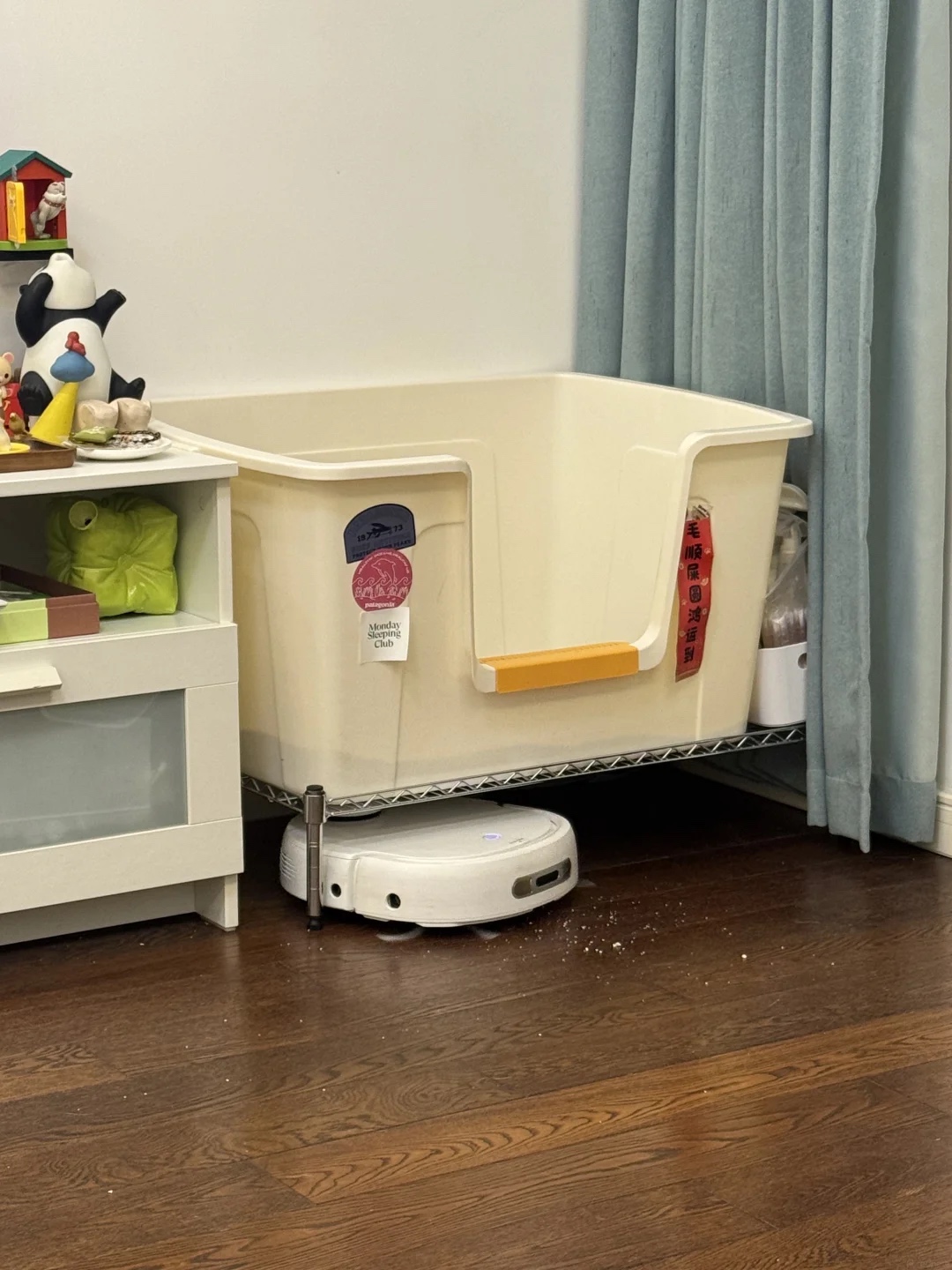
Keep the box itself stable while cleaning around it. For a tray that is heavy, wired, or difficult to move, a narrow hand tool may be a better choice than relocating it. The aim is to reach the tracked litter without disrupting the cat’s familiar bathroom arrangement.
Why a robot can struggle beside the litter box
Hair and damp debris collected inside. After hearing a rattling sound, a robot owner checked the underside and opened the dust container, finding hair mixed with hardened, dirt-like material. Inspect the brush and collection path when pickup changes, and collect damp litter manually before the next run.
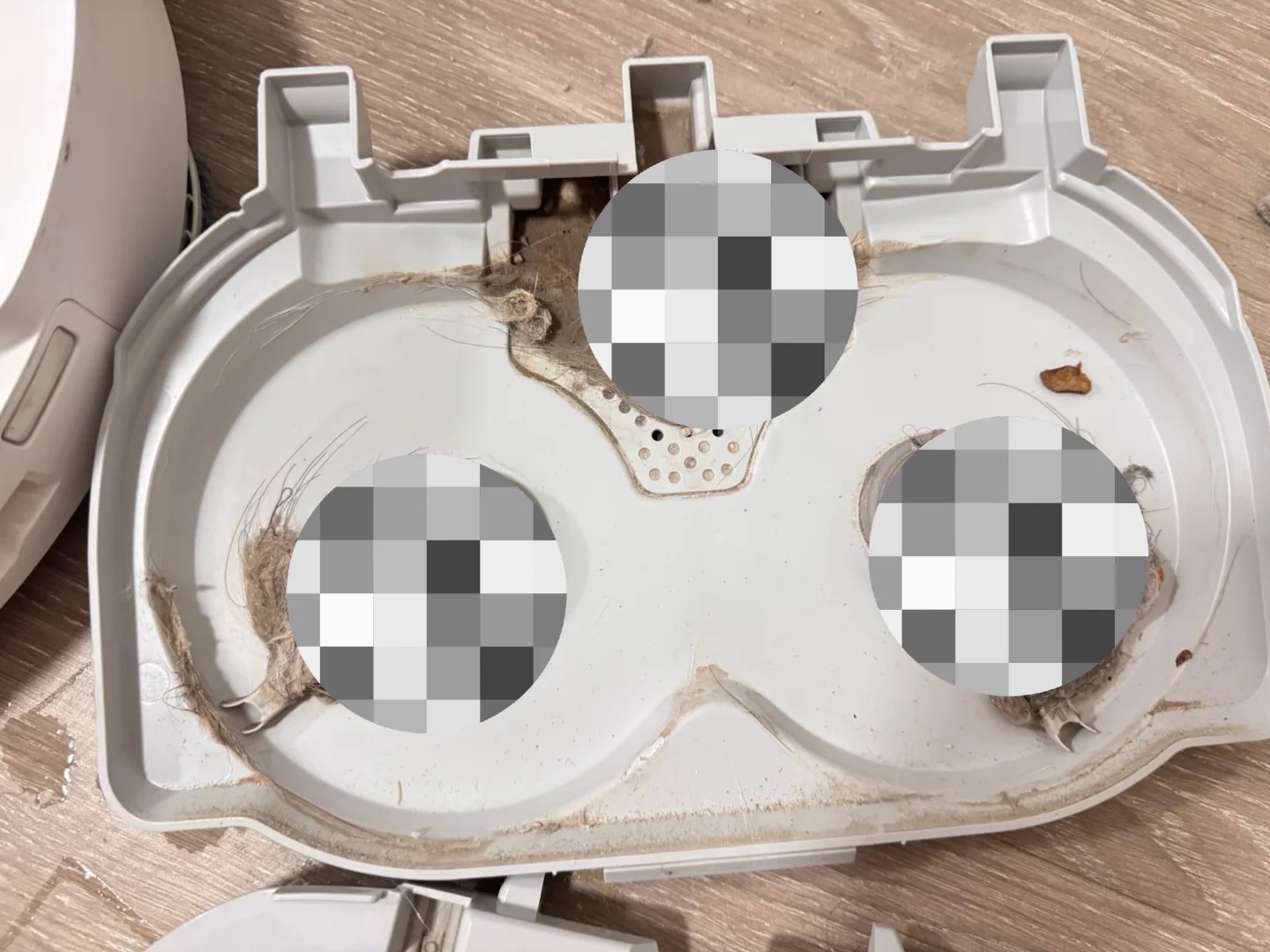
Scheduling matters. A machine running immediately after a cat has kicked wet material out of the box faces a different mess from one passing over yesterday’s dry tracking. Look at the area before an unattended run, especially if the cat sometimes eliminates outside the tray.
Watch what happens to the grains during the first pass. Some may remain beside the box, move beneath the mat, or collect at an edge. A map showing that the robot visited the room is not the same as seeing that it removed the spill. Use a quick floor inspection to decide whether a hand cleanup is still needed.
Empty and inspect before the next cleaning job
The particles stayed in the container. A handheld-vacuum owner found litter particles remaining around the collection area even after trying to pick them out with a toothpick. Open the accessible collection parts and inspect them before storing the machine.
Work with the power disconnected. Empty the container or replace the bag as specified for the machine, and remove accessible debris from the attachment. Keep water away from parts that are not washable. Refit only fully dry washable components, using the actual drying requirement for that filter rather than guessing from how its surface feels.
If there is a new smell, unusual sound, reduced pickup, or visible blockage, pause the next run and check the maintenance instructions. A narrower nozzle or stronger suction is not a substitute for removing a blocked pickup path. Keep the litter-cleaning attachment clean before taking it to upholstery or another living area.
FAQ
Is it okay to vacuum cat litter with a normal vacuum?
It depends on the model and the mess. Some ordinary dry vacuums are expressly designed to collect dry spilled litter; check for that permission and use the approved attachment. Collect damp clumps and toilet waste separately.
Can you vacuum clumping cat litter?
Treat loose, dry granules separately from clumps that have absorbed liquid. Sweep the bulk of a spill first, then use a compatible vacuum for the remaining dry tracking. A clump formed in the toilet belongs in the waste-disposal routine.
Will cat litter damage a vacuum?
Damage is not inevitable, but approved use and maintenance matter. Reduce the load with a dustpan, keep wet material out of a dry machine, and inspect the collection path if noise, smell, or suction changes.