Yes: common indoor Ficus plants—including fiddle-leaf fig, rubber tree, and weeping fig—belong outside a cat’s accessible living space. Check the scientific name on the label, because a baby rubber plant, Peperomia obtusifolia, is a different plant from the rubber tree Ficus elastica. The household examples below compile publicly shared observations of plant placement and cat behavior rather than tests of plant safety.
Check the scientific name before the common name
A shop label saying “fig” or “rubber plant” is a starting point, not enough to choose the right care and safety information. Read the botanical name, photograph the label, and keep it with a picture of the whole plant. The first word identifies the genus; the second identifies the species in the names below.
The ASPCA’s cat plant directory lists Fig as Ficus benjamina and Baby Rubber Plant as Peperomia obtusifolia. That difference changes the safety classification. Check the full name on the specific plant rather than borrowing a result from another plant with “rubber” on its tag.
Name commonly used in shops
Scientific name to check
Useful identification features
Cat-access decision
Fiddle-leaf fig
Ficus lyrata
Large, broad, fiddle-shaped leaves on woody stems
Keep inaccessible to cats
Rubber tree or rubber plant
Ficus elastica
Large, thick, glossy, oval leaves; colored forms also exist
Keep inaccessible to cats
Weeping fig
Ficus benjamina
Smaller pointed leaves and slender, drooping branches
Keep inaccessible to cats
Baby rubber plant
Peperomia obtusifolia
Compact growth and cupped, rounded-to-oval leaves
ASPCA lists this species as non-toxic to cats
The features help you compare a label with a plant; combine several of them rather than relying on leaf color. North Carolina Extension’s fiddle-leaf fig profile identifies Ficus lyrata and states that it is toxic to cats if ingested. Its plant profiles also distinguish the thick-leaved Ficus elastica from the smaller-leaved, drooping Ficus benjamina.
If the label is missing, keep the plant in a cat-free room while a nursery or extension service helps identify it. Take a whole-plant photograph, a clear leaf photograph, and a view of the stems and branching. Keep the plant intact during identification; breaking a leaf to inspect sap creates an avoidable cleanup task.
What the three Ficus names mean for your home
Fiddle-leaf fig, Ficus lyrata, is a common indoor tree with large leaves and milky sap. Both North Carolina Extension and ASPCA discuss its potential to irritate pets. For a household decision, choose a location where the cat cannot reach the plant, its fallen leaves, or cuttings left during maintenance.
Rubber tree, Ficus elastica, is also a Ficus, despite looking different from a weeping fig. Pet Poison Helpline’s rubber-tree entry names the species and describes irritating sap in its leaves and stems. A glossy leaf or a colorful cultivar is still part of the same species-level placement decision.
Weeping fig, Ficus benjamina, has its own ASPCA Fig entry classed as toxic to cats, and NCSU flags it as a problem for cats. It is sometimes sold with a braided trunk, but that is a growth form rather than a different plant identity. Match the botanical name even when the shop display looks unlike a familiar picture.
Baby rubber plant, Peperomia obtusifolia, belongs to a different genus. ASPCA lists it as non-toxic to cats, and NCSU describes its compact growth and cupped leaves. When you want to check that option, take the exact two-word name to the nursery; “a small rubber plant” can still be an undersized Ficus elastica.
Look at the route from the cat to the plant
Start at floor level and follow the route upward. A chair beside a plant stand, a windowsill next to a pot, or a shelf within stepping distance can connect the cat to foliage that looks high from across the room. Check the route again after moving furniture, because the useful question is whether there is access now.
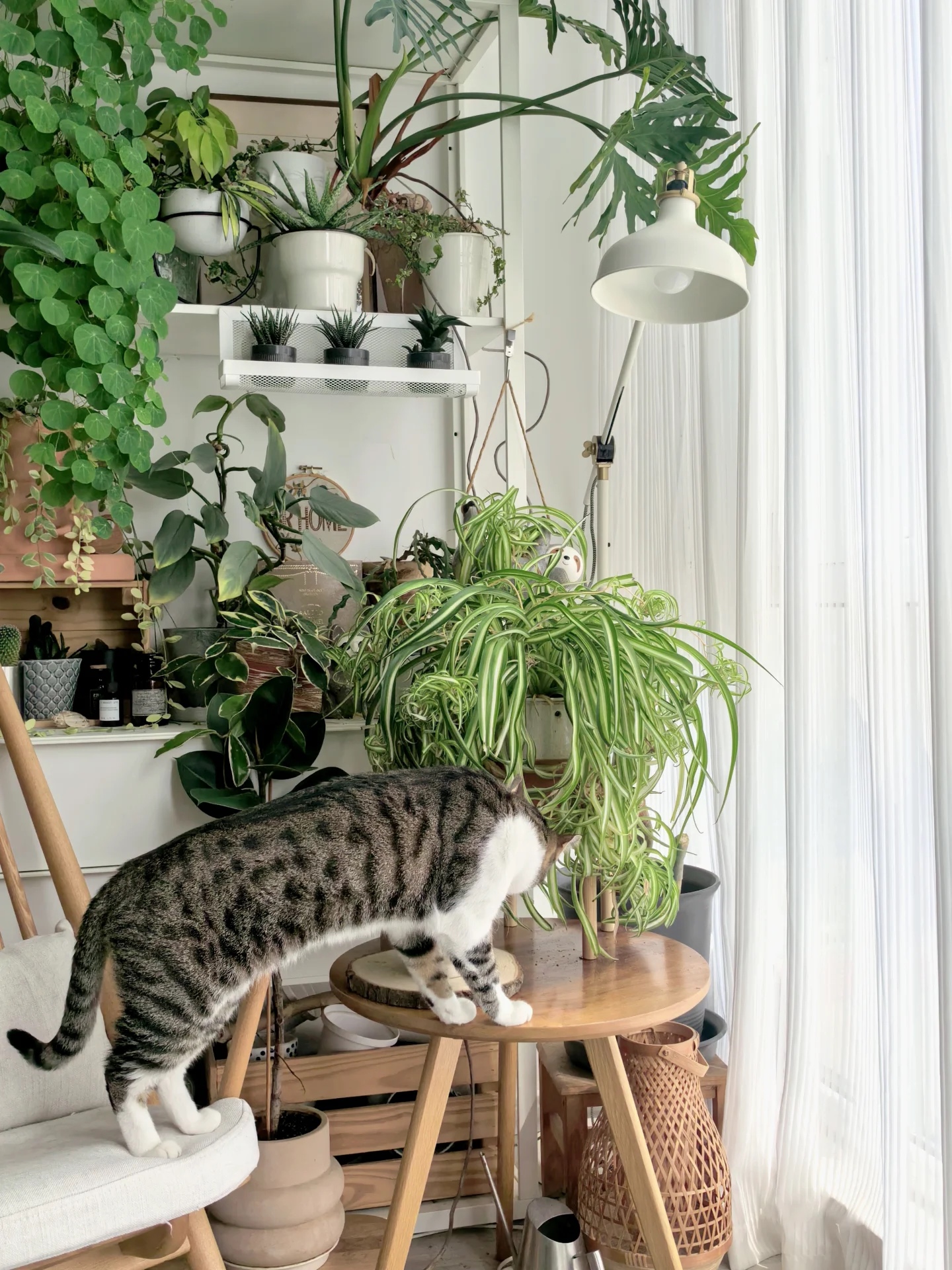
The chair connected two levels. In a three-cat home, an owner described changing levels of interest in the plants; one photograph catches a cat stepping from a chair toward a plant stand among densely arranged pots. The chair puts the cat beside the foliage; trace the route from your own cat’s resting spots to every pot before choosing the plant’s location.
A closed, cat-free room creates a clearer boundary than a high shelf. Keep the door closed and make sure it latches, including when someone waters the plants or opens a window. If the room is also used for work or storage, leave a reminder at the handle so another person knows why the boundary matters.
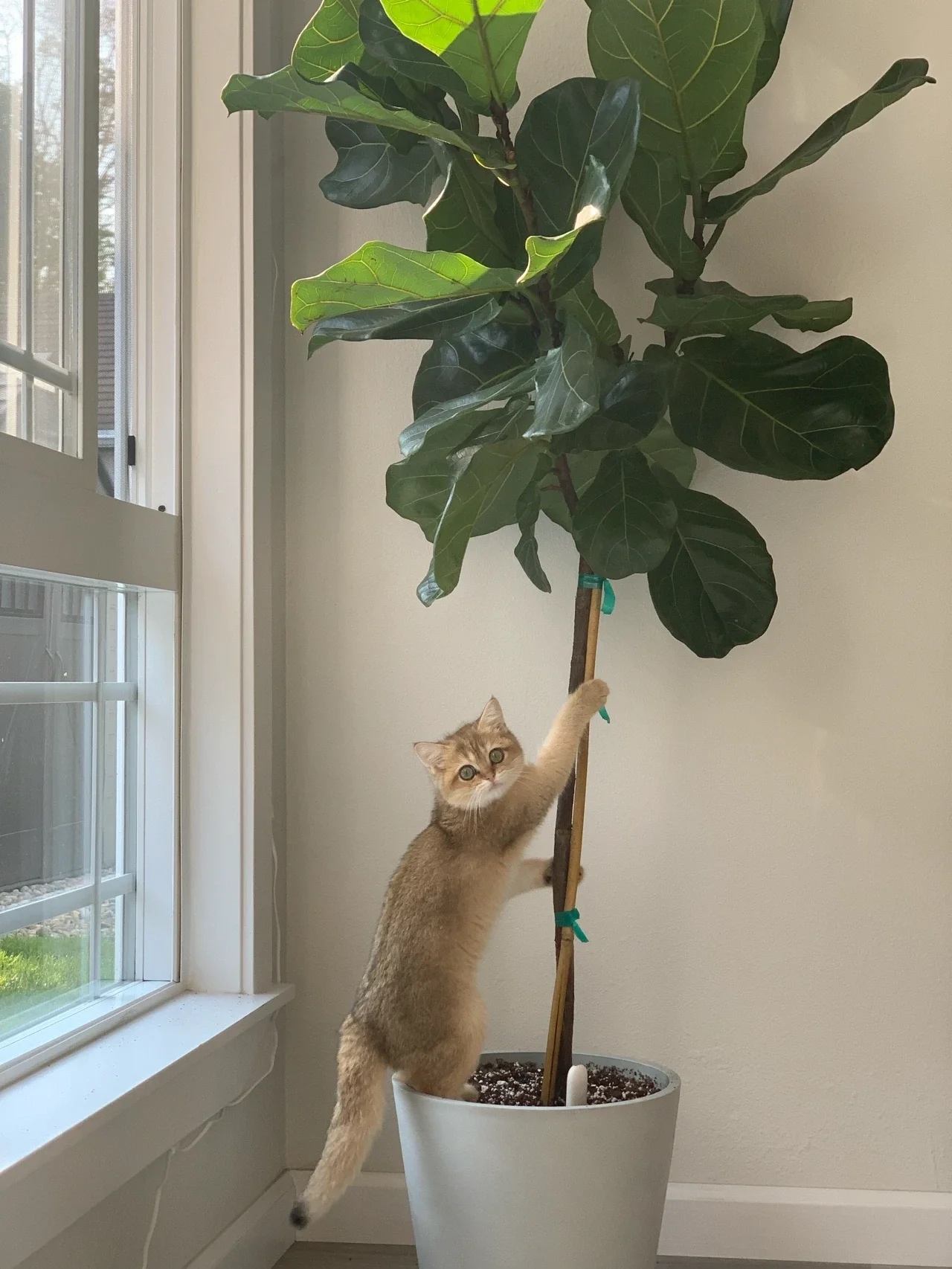
The first day included climbing. Within 24 hours of arriving, another kitten was photographed standing in a tall plant’s pot and reaching up its woody stem; the owner also described digging in the soil. The trunk and pot offered access before a household routine had developed; move a plant out of the arrival room before bringing a new cat into that space.
For that room-preparation process, see helping a cat settle into a new home. Treat a newcomer’s first inspection of the room as a reason to check access routes, not as a trial in which the plant stays available until chewing occurs.
Recheck as the plant and room change
Keep a quick inventory with the botanical name, room, boundary, and maintenance task. A plant that has grown wider may extend leaves beyond the original space; a fallen leaf can end up outside the pot. Check the floor and nearby surfaces when watering, rotating, or moving the plant.
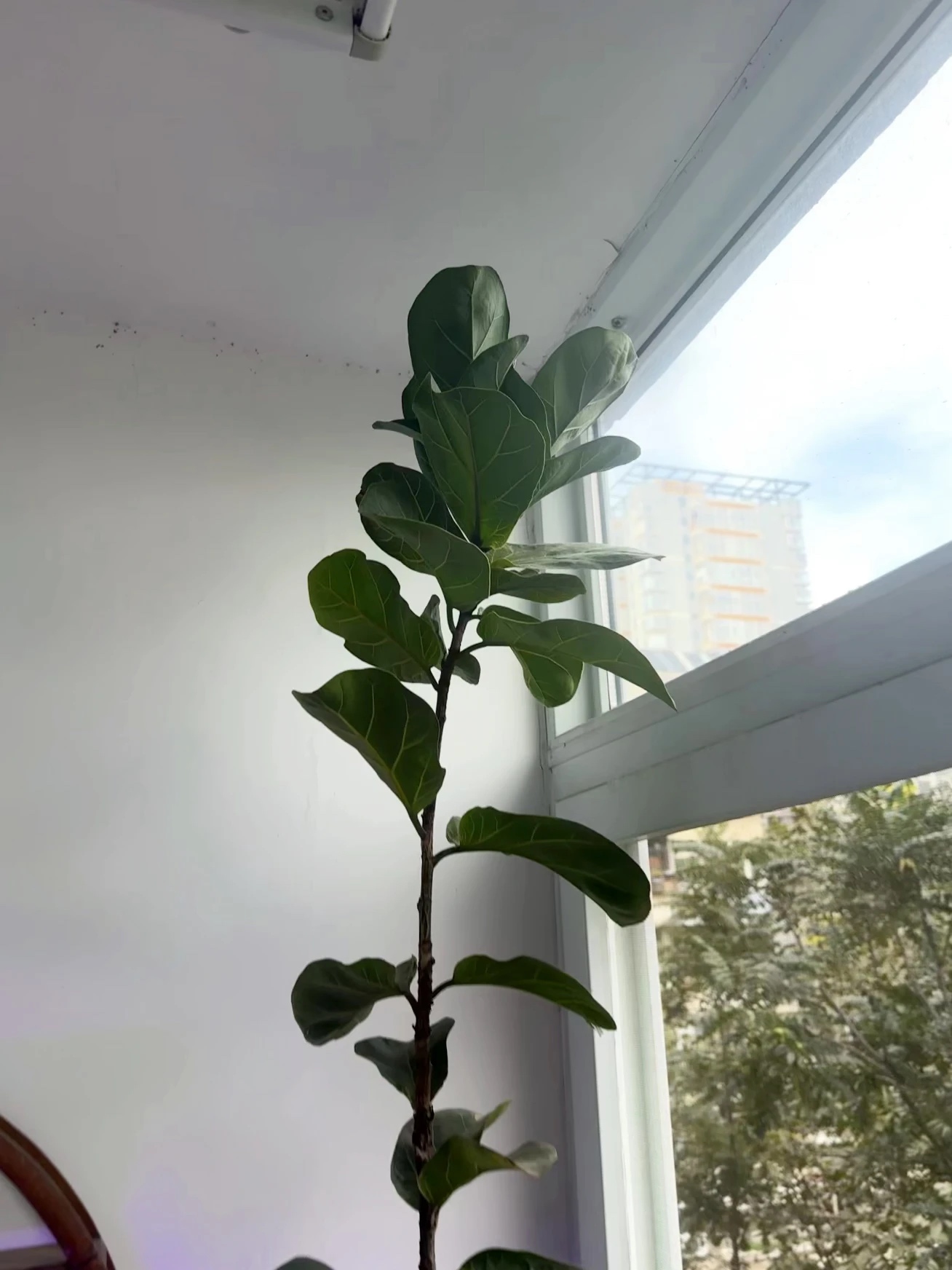
Four leaves became a tall plant. A third owner had kept a plant sold as a fiddle-leaf fig since 2022, describing growth from four leaves to approximately person-height while reporting little interest from the household cat. The photograph shows its tall stem and foliage beside a window; recheck leaf reach and fallen material as a plant grows, even when the cat’s routine has been quiet.
Do plant maintenance while the cat is elsewhere. NCSU recommends gloves when pruning Ficus lyrata because its sap can irritate skin. Keep cuttings and fallen leaves together for disposal, clean the work area, and put tools away before reopening access to the room outside the plant’s secure space.
A useful household note is concrete: “Ficus lyrata, office, latched door, check floor after watering.” Another is “label missing, closed room pending identification.” Update the note when the plant changes rooms, a cutting becomes a new pot, or furniture changes the cat’s route to the window.
Choose an arrangement you can maintain
Decide who opens the plant room, waters the pots, and clears fallen material. If that boundary will routinely be left open, moving the Ficus out of the home is easier to maintain than relying on constant supervision. A cat’s climbing ability and curiosity need room in the plan alongside the plant’s light needs.
For other plants, make a new species-specific check. The name distinction here also matters when checking a palm’s identity around cats or choosing flowers for a cat household. Use those separate guides for those plants rather than extending a Ficus answer to every green thing in the room.
If you suspect the cat has chewed or swallowed a Ficus, contact your veterinarian or an animal poison service promptly and have the plant name and photographs ready. The identification record gives the professional a more useful starting point than the shop’s common name alone.
FAQ
Are ficus poisonous to cats?
The three Ficus species covered here need to be kept inaccessible: Ficus lyrata, Ficus elastica, and Ficus benjamina. Identify the plant by its scientific name and plan a reliable boundary.
Is Ficus elastica toxic to cats?
Yes. Pet Poison Helpline identifies Ficus elastica as rubber tree and describes irritating sap; NCSU also flags it as a problem for cats. Keep the leaves, stems, and maintenance debris out of reach.
Are rubber trees toxic to cats?
Check which plant the label names. Rubber tree Ficus elastica belongs in a cat-free space; baby rubber plant Peperomia obtusifolia is a different species that ASPCA lists as non-toxic to cats.
Is ficus safe for cats?
The indoor Ficus species covered here—Ficus lyrata, Ficus elastica, and Ficus benjamina—are not safe for a cat to chew. Keep them, fallen leaves, and cuttings inaccessible. Baby rubber plant Peperomia obtusifolia is a different genus that ASPCA lists as non-toxic to cats; check the scientific name before choosing a plant.